

Crown Hair Transplant
Cost & What to Know (2026)
Home › Guides › Crown Hair Transplant: Cost & What to Know (2026)
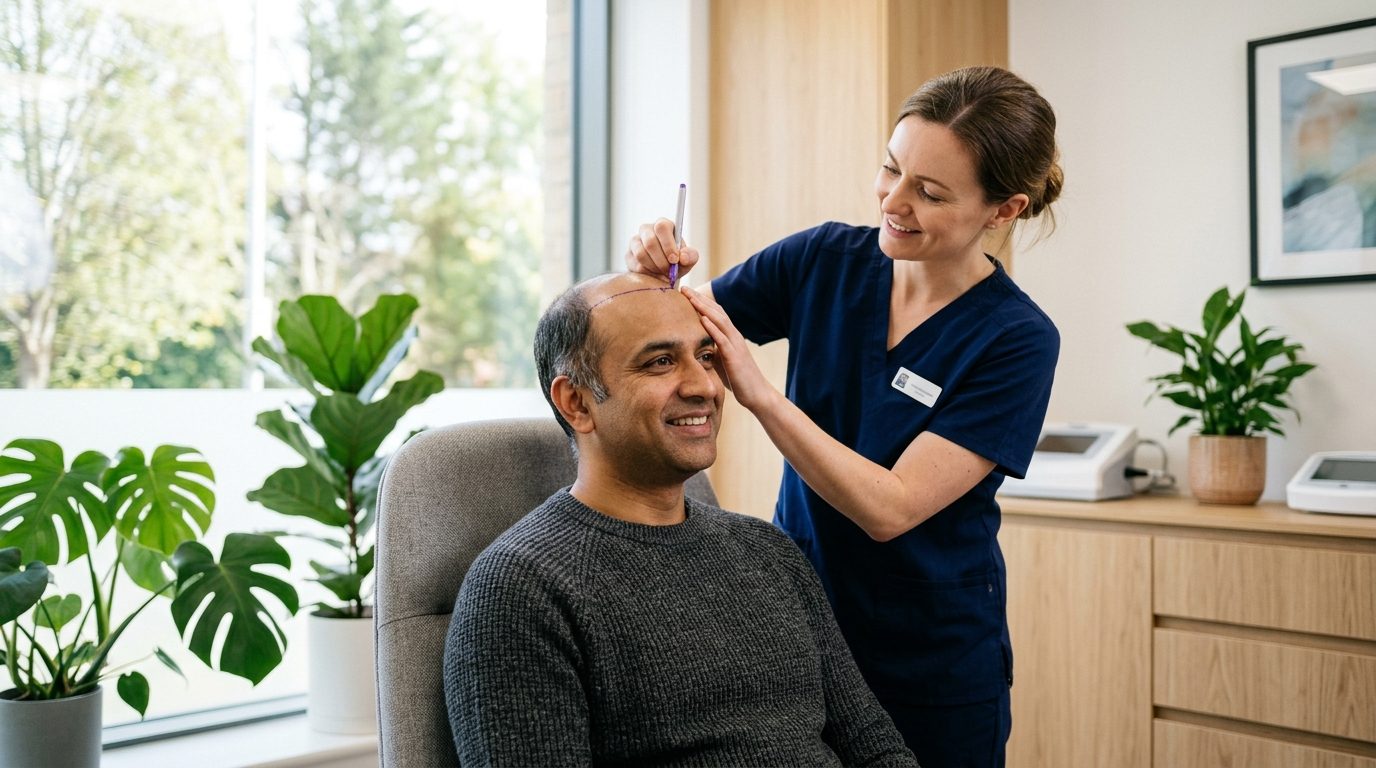
A crown hair transplant costs from around £1,900 in Turkey against £6,000–£12,000 in the UK. The crown is the trickiest area to restore because its whorl growth pattern is greedy for grafts. This guide covers the cost, the graft counts and the results to expect realistically.
What does a crown hair transplant cost?
The crown (the vertex, at the back of the top of the scalp) is priced the same way as any other area — by graft count — but it typically needs a higher count to look right, so a crown-only case often lands in the same bracket as a 2,000 or 3,000-graft procedure.
| Route | Crown restoration (2,000–2,500 grafts) | Typical saving vs UK |
|---|---|---|
| Turkey (FUE package) | £1,490–£2,050 | 65–75% |
| Hungary / Poland (EU-regulated) | £2,400–£3,600 | 45–60% |
| Spain | £3,000–£4,500 | 35–50% |
| UK private | £6,000–£12,000 | baseline |
Already have a clinic in mind? See what the official records say about it →
The Turkish price is a package covering the surgery, hotel nights, VIP transfers, medication and aftercare. Return flights add £100–£250. Because Turkish clinics price per session, a crown case that needs a higher graft count is not proportionally more expensive than a front-third one. Our hair transplant abroad cost guide shows the full ladder and the Turkey cost guide breaks down the destination.
Considering a particular clinic? See what the official records say about it, free →
Ask us about dental treatment abroad, free
Tell us what you're looking into. We send your enquiry to relevant, pre-vetted clinics, and up to 3 that can help contact you directly.
Thera is free for patients. No clinic can pay to change the prices we publish.
Why the crown needs more grafts
The crown grows in a spiral, or whorl — hairs fan out from a central point in different directions rather than falling in one consistent line like the hairline. To look natural, that pattern has to be recreated angle by angle, and the eye reads any gap in a whorl as thinness more readily than it does elsewhere.
Two things follow from that. First, the crown swallows grafts: covering it convincingly needs high density, so a crown restoration often takes 2,000–2,500 grafts or more where a similar-sized patch at the front might take fewer. Second, it is technically demanding, because the surgeon has to match the changing hair direction across a curved surface. Recreating the whorl is one of the harder skills in hair restoration, which is another reason who performs your surgery matters. The International Society of Hair Restoration Surgery (ISHRS) warns specifically about clinics where a technician, not a doctor, does the work — and the crown is where that gap shows.
The donor-supply trade-off
Because the crown is so graft-hungry, restoring it draws heavily on your finite donor supply at the back and sides of the scalp. That creates a genuine trade-off many patients do not hear about upfront: grafts spent densely packing the crown are grafts not available for the hairline and front, where coverage frames the face and does most for appearance.
A good surgeon plans this honestly. If your loss is advancing and your donor supply is limited, prioritising the front over the crown is often the more durable decision, because the crown can keep expanding as patterned loss continues — and chasing it can leave an "island" of transplanted hair surrounded by new loss. The ISHRS frames this kind of donor management as central to a lasting result. Our guide to how many grafts you need explains how the estimate accounts for it.
Realistic expectations for crown work
A well-planned crown transplant restores coverage and reduces the see-through look, but managing expectations matters more here than anywhere. Because the whorl needs such density, a single session may soften rather than fully erase a bald crown, and some patients need a second session for full coverage — see our 5,000 graft guide for how staged plans work.
The timeline is the same as any transplant: the transplanted hair sheds within weeks, regrowth begins around month three or four, and the full result lands at 12 to 18 months. The crown can be a little slower to show its final density than the front. Any clinic promising a fully packed crown in weeks is misreading the biology, which our hair transplant safety guide covers alongside spotting overselling.
Vetting a clinic for crown work
The crown rewards surgical skill and punishes shortcuts, so vetting matters. Confirm in writing that a qualified surgeon plans and performs the procedure, get the graft count and technique documented, and agree aftercare before you pay. The NHS does not fund correction of cosmetic work done privately abroad, so your pre-booking checks are the whole safety net. The Turkey medical tourism guide sets out the full checklist.
Frequently Asked Questions
How much does a crown hair transplant cost in 2026?
From around £1,490–£2,050 in Turkey for a 2,000–2,500 graft crown restoration, against £6,000–£12,000 privately in the UK. The Turkish price is a package including hotel, transfers, medication and aftercare, so even with £100–£250 flights the saving stays large.
Why does the crown need more grafts than the hairline?
The crown grows in a spiral whorl, and the eye reads any gap in that pattern as thinness. Covering it convincingly needs high density, so a crown restoration often takes 2,000–2,500 grafts or more, where a similar patch at the front might need fewer.
Should I restore the crown or the hairline first?
If donor supply is limited and loss is advancing, most surgeons prioritise the front, where coverage frames the face, and treat the crown cautiously because it can keep expanding. Spending grafts on the crown can leave less for the hairline. A surgeon judges the split from your scalp.
Will one session fully cover a bald crown?
Not always. Because the whorl is so graft-hungry, a single session may soften rather than fully erase a bald crown, and some patients need a second session for full density. A surgeon sets realistic expectations after examining your donor supply.
Is a crown transplant harder to do well?
Yes. Recreating the whorl's changing hair direction across a curved surface is technically demanding, so who performs the surgery matters. The ISHRS warns about clinics where a technician rather than a doctor does the work, which shows most on the crown.
See also: compare countries for dental implants.
Clinics UK patients look at
The four with the most Google reviews among the dental clinics we hold. Each has a free page with its records.
 Dentakay Dental ClinicIstanbul, Turkey
 Attelia Oral and Dental Health CenterAntalya (Kızıltoprak, Muratpaşa), Turkey
 DentSpaIstanbul, Turkey
 Esnan Dental Clinics Topkapı (Istanbul)Istanbul (Topkapı, Zeytinburnu), Turkey

Written by Saher Shodhan
Saher Shodhan is the founder of Thera Travel, which publishes what the official records show about clinics abroad, each fact with the date it was checked, and answers patients' enquiries, free. More about Thera → How we write and check our guides →
Related posts

Is It Safe to Get Dental Implants Abroad? What to Check in 2026
Turkey teeth: what they are, what they cost and how to check a dentist