
Is It Safe to Get Dental Implants Abroad? What to Check in 2026
Home › Guides › Is It Safe to Get Dental Implants Abroad? What to Check in 2026

Dental implants abroad can go well, and they can go wrong, and the difference is usually the plan and the aftercare rather than the country. In a British Dental Association survey of 1,000 UK dentists, published in July 2022, 86% of those who had seen patients treated abroad said they had treated problems afterwards. Implants were the second most likely treatment to need follow-up work (85%), after crowns [1].
Written by Saher Shodhan. Prices abroad are from clinics' own price lists, checked 6 Oct 2026, and UK prices from practices' own price pages, checked 7 Oct 2026 and re-read 31 Oct 2026. What regulators and the NHS say is quoted from their own pages, read 2 Nov 2026. Sources are numbered at the end.
That survey counts dentists who have seen problems, not how often problems happen. This guide sets out what the UK regulators say, what implants cost abroad, why problems happen, what to look for in Turkey, and how to check a clinic yourself before you pay a deposit.
The short, honest answer
It depends on the clinic, the timeline and the aftercare plan. Many UK patients have implants in Turkey, Hungary and Poland; UK dentists also see patients who need repairs [1]. Check the clinic and the dentist before you pay, get the plan in writing, and agree what happens if something goes wrong after you are home.
Ask us about dental treatment abroad, free
Tell us what you're looking into. We send your enquiry to relevant, pre-vetted clinics, and up to 3 that can help contact you directly.
Thera is free for patients. No clinic can pay to change the prices we publish.
What dental implants cost abroad
On clinics' own price lists, one dental implant costs £311 to £439 in Turkey, from 34 price lists (checked 6 Oct 2026). In the UK, practices charge £1,050 to £1,500 for the implant alone and £2,034 to £2,900 with its crown [2] [3].
| Where | One implant | Based on |
|---|---|---|
| Turkey | £311 to £439 | 34 price lists, covering 68 clinics |
| Hungary | £399 to £586 | 13 price lists |
| Poland | £710 to £924 | 8 price lists, covering 26 clinics |
| UK, private | £1,050 to £1,500 for the implant alone; £2,034 to £2,900 with its crown | 5 practices that price the implant alone; 14 practices that price it with the crown |
Abroad: clinics' own price lists, checked 6 Oct 2026, converted at the European Central Bank rate of that day [2]. Each range is the middle half of the clinics' entry prices; a clinic's entry price is the lowest it publishes for one implant, and may not include the abutment or the crown. UK: practices' own price pages, middle half of their prices, checked 7 Oct 2026 and re-read on 31 Oct 2026, when none had changed [3].
Comparing clinics for your own treatment? Ask us, free →
Flights, hotel nights and a second trip come on top of the price abroad, and so does any repair at home if something goes wrong. Ask each clinic whether its price includes the abutment, the crown, scans and any bone graft. Our guide to the best country for dental implants compares six countries on price, regulation and travel, and our UK dental implants cost guide lists practice prices.
Before you pay a deposit
Three checks to make yourself before any money changes hands:
- Find the clinic on its country's official register of healthcare providers, under the company name on your quote.
- Get the dentist's full name in writing and check them where the country has a public register. Turkey has none we can search, so ask for the diploma.
- Ask for the implant brand, a written plan for every trip, and the clinic's written terms if an implant fails at home.
You can see what the official records say about a clinic, free →
Clinics we hold, by country
Each has a free summary page: the register entry we found, the Google listings and any published prices. Thera is free for patients. No clinic can pay to change the prices we publish.
What the GDC and NHS actually say
The General Dental Council (GDC), the UK regulator, does not tell patients not to travel. It tells them to go in with their eyes open [4]:
- "Dental regulation is likely to vary according to country, so it's a good idea to do some initial research."
- The dentist carrying out your assessment "should ask for your full medical history."
- "It's always a good idea to speak to your own dentist before considering travelling abroad for your treatment."
The NHS says implants "are usually only available privately and are expensive" [5]. Its treatment abroad checklist says to "think carefully before booking any treatment abroad" if there is "a hard sell", "pressure to make a quick decision", "no discussion of possible complications" or "no mention of aftercare" [6]. It also says: "You cannot get reimbursement for dental treatment" [6].
Neither page tells patients that going abroad is unsafe.
What UK dentists are actually seeing
The British Dental Association surveyed 1,000 UK dentists in 2022 [1]. 94% said they had examined patients who had gone abroad for dental treatment. Of those dentists [1]:
- 86% had treated cases that developed problems after treatment abroad.
- 87% named crowns as the treatment most likely to need follow-up work, closely followed by implants at 85%.
- The risks they named most were failing or failed treatment (86%), pain (76%) and poorly executed treatment (72%).
The repair bills matter too. 65% said repairs cost patients at least £500, 51% said more than £1,000, and one in five said the cost was over £5,000 [1]. Over 40% (346 dentists) said the repair work was provided by the NHS [1].
Two honest caveats. First, this is a survey of dentists, not a complication rate: it tells us most UK dentists have seen problems, not what percentage of travelling patients have them. Second, treatment done in the UK can need redoing as well. But the signal is real, and it is why this page exists.
Why complications happen (it is not "foreign = bad")
The problems the dentists described come from the structure of the trip as much as from any one clinic:
- Rushed timelines. The BDA's chair said: "Complex courses of treatment typically require detailed preparation and a number of follow-up visits" [1]. The NHS says the replacement parts "may not be available on your first visit to the dentist" [5]. A clinic that promises everything in one short visit to everyone is a reason to ask more questions.
- No aftercare once you fly home. Dentists in the survey reported "ill-fitting crowns and implants that fell out", and treatment that went ahead "despite having untreated gum disease" [1]. If no follow-up was arranged at home, small problems are harder to deal with.
- Too much treatment, too fast. Some dentists "expressed alarm that patients had extensive work done to previously healthy teeth" [1].
- Pressure selling. Deposit-today discounts and WhatsApp countdowns push patients past the checks they intended to make. The NHS lists "a hard sell" and "pressure to make a quick decision" as warning signs [6].
None of these risks is tied to one country. All of them can be checked before you pay.
Green flags vs red flags at a glance
| What to check | Green flag | Red flag |
|---|---|---|
| Who treats you | Named dentist you can look up on a register | No named dentist, or one you cannot look up |
| Diagnosis | Scan and medical history taken first | Fixed price quoted from photos alone |
| Implant brand | Named brand with passport and warranty | Brand unspecified or "premium" only |
| Timeline | A written timeline for each stage, with the number of trips | "Teeth in a day" offered to everyone |
| Aftercare | Written plan and UK follow-up arranged | None mentioned until you ask |
| Sales approach | Time to decide, records handed over | Deposit-today pressure, records withheld |
How to reduce the risk
Work through this checklist before you pay a deposit:
- Check the clinic and the dentist on the official registers. Each country keeps its own; our country guides link to them. If a clinic claims JCI accreditation, look it up in JCI's own directory.
- Insist on a named implant brand with an implant passport or warranty card. This records exactly what is in your jaw, so another dentist can see what was used.
- Get a written aftercare plan, including what happens if there is a problem after you fly home, and ideally a named UK follow-up arrangement.
- Take copies of everything: records, prescriptions, scans and X-rays, before you leave the clinic.
- Be sceptical of "teeth in a day" unless your dentist has explained why it suits your case.
- Talk to a UK dentist first. The GDC says your own dentist "may be able to offer advice based on your dental history" and "will also need to be aware of your plans in case of any later complications" [4].
Dental implants in Turkey: what to check
Turkey publishes lists of the hospitals and clinics authorised to treat international patients, kept by the Ministry of Health [7]. The lists are PDFs in Turkish, they give legal names and addresses, and they carry no authorisation numbers. Turkey has no public register of dentists we can search, so the dentist's name and diploma have to come from the clinic in writing. When we last checked the clinics we hold in Turkey (6 October 2026), we found most of them on the Ministry lists, and some we could not find under their brand name. That is why the company name on your quote matters. Our guide on how to check a clinic in Turkey shows how to read the lists.
Red flags that should end the conversation
- A fixed price quoted from photos alone, with no scan or medical history taken
- Promises about the result, or a warranty that only applies if you fly back at your own cost with no UK alternative
- No named dentist, or a dentist you cannot find on a register
- Every patient gets the same plan, usually the most profitable one
- Pressure to pay a deposit today to "lock in" a discount
- No written timeline for each stage of the treatment
- Refusal to hand over your records and X-rays
Any one of these is a reason to walk away, however good the price looks in our comparison of dental implant prices by country.
When staying in the UK is the right call
An honest guide has to say this plainly: abroad is not right for everyone.
- Complex cases, such as major grafting or full-mouth treatment, mean more stages and more trips. Treatment split across two countries is harder to coordinate if a stage goes wrong.
- Medical conditions. The GDC says the dentist assessing you "should ask for your full medical history" [4]. If you have a long-term condition, your own dentist and GP are close by at home.
- Small treatment plans. For one straightforward implant, the published difference is £1,050 to £1,500 in the UK for the implant alone against £311 to £439 in Turkey (checked 6 to 7 Oct 2026) [2] [3]. Flights, hotels and time off for two trips may take much of that gap. See dental implants abroad, prices by country before deciding.
- If you cannot make every trip the plan needs, a squeezed timeline abroad is a compromise. Stay home or wait.
How to check a clinic from home
Most of the risk in this guide comes from not being able to check a clinic in another country. Much of it can be checked from home. Each country keeps its own register of clinics, and most keep one for dentists. Our country guides show where to look: Turkey, Hungary, Poland and Spain. The GDC suggests asking: "Does that country have a professional regulatory body? Is it compulsory for dental professionals to be registered with them?" [4]. An older link we gave here, healthregulation.org, now opens the website of the UK's Health and Care Professions Council (checked 2 Nov 2026), which does not list regulators abroad.
Frequently Asked Questions
Will the NHS fix my implants if something goes wrong abroad?
Do not count on it. In the 2022 British Dental Association survey, over 40% of dentists who had seen patients treated abroad said the NHS had provided the repair work, but 51% said repairs cost patients more than £1,000 and one in five said over £5,000 [1]. The NHS says implants "are usually only available privately" [5].
Is Turkey less safe than Hungary or Poland?
No country makes a clinic good or bad. Hungary, Poland, Croatia and Spain are in the EU, and our country guides show where to look up dentists in Hungary, Poland and Spain. Turkey lists the clinics authorised for international patients but has no public register of dentists we can search, so ask for the dentist's diploma in writing. Judge the clinic, not the flag.
What is an implant passport and why does it matter?
It is a card or document recording the exact brand, model and size of your implant. With it, a dentist at home can see what was used if you need a repair. Without it, they may have to find out first.
Can dental implants really be done in one trip?
Ask the clinic why, in writing, if it offers one trip. The NHS says the replacement parts "take time to prepare because they need to fit your mouth and other teeth properly", so they "may not be available on your first visit to the dentist" [5]. Be wary of any clinic that offers one trip to everyone.
Should I tell my UK dentist I'm going abroad?
Yes. The GDC says: "It's always a good idea to speak to your own dentist before considering travelling abroad for your treatment", because they "will also need to be aware of your plans in case of any later complications" [4].
How do I check a foreign clinic is legitimate?
Look the clinic up on its country's official register under the company name on your quote, check the named dentist where a public register exists, confirm the implant brand and warranty in writing, and get the aftercare plan on paper. Our country guides show where each register is.
Sources
- British Dental Association, UK dentists picking up the pieces from dental tourism boom: survey of 1,000 UK dentists, published July 2022. Read 2 Nov 2026.
- Thera Travel, clinic price index (download: prices.csv): clinics' own published price lists, converted at the European Central Bank reference rate of 6 Oct 2026. Checked 6 Oct 2026.
- UK dental practices' own price pages: Bupa Dental Care, Portman Dental Care, Together Dental, The Perfect Smile Studios, Toothi, Spring Shaw Dental, Leagrave Dental Sedation Clinic, Walmsley Dental, Banning Dental, MYO Dental, Nonsuch Park Dental, William Place Dental, The Hub Dental Practice, Dr Nikhil Oberai, DentAkademi London, Highview Dental Practice. 14 of them price an implant with its crown and 5 price the implant alone. The Bupa page refused automated requests on 31 Oct 2026 and was read from a web-reader copy. Checked 7 Oct 2026, re-read 31 Oct 2026.
- General Dental Council, Going abroad for dental treatment. Read 2 Nov 2026.
- NHS, Dental treatments: dental implants. Page last reviewed 8 July 2026. Read 2 Nov 2026.
- NHS, Treatment abroad checklist. Page last reviewed 19 November 2023. Read 2 Nov 2026.
- Republic of Türkiye Ministry of Health, Healthcare providers authorised for international health tourism (the address now opens the Ministry's health tourism list). Read 2 Nov 2026.
Related guides: Turkey teeth gone wrong, the dental implant trip, step by step and choosing a country for implants.
This guide is general information, not medical advice.
Clinics UK patients look at
The four with the most Google reviews among the dental clinics we hold. Each has a free page with its records.
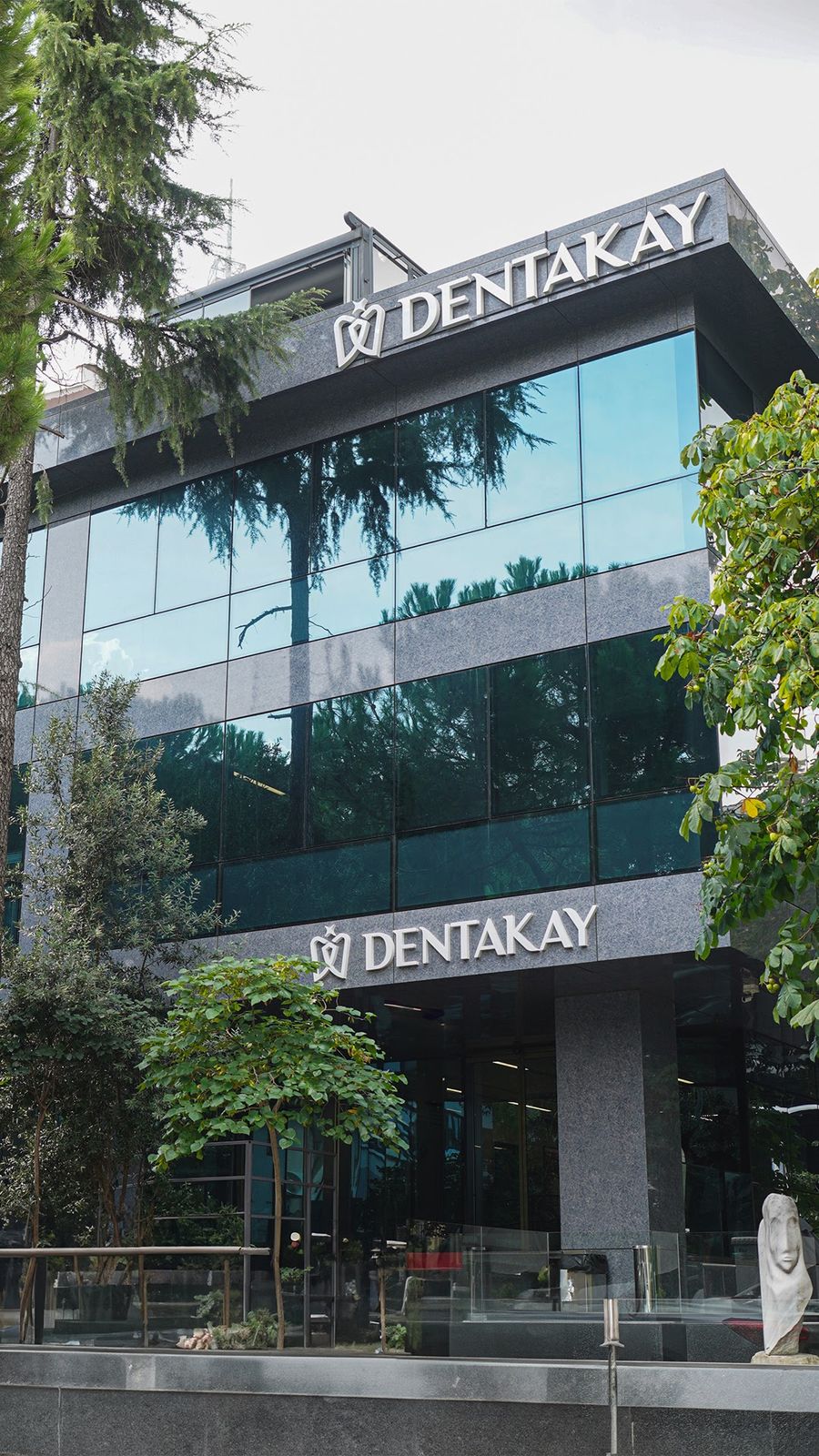 Dentakay Dental ClinicIstanbul, Turkey
 Attelia Oral and Dental Health CenterAntalya (Kızıltoprak, Muratpaşa), Turkey
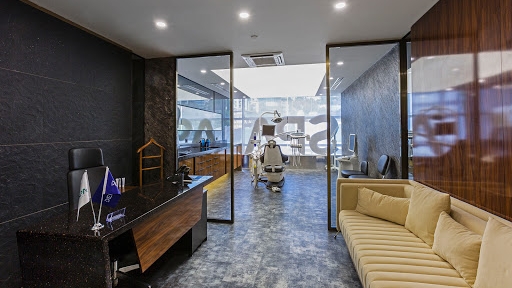 DentSpaIstanbul, Turkey
 Esnan Dental Clinics Topkapı (Istanbul)Istanbul (Topkapı, Zeytinburnu), Turkey

Written by Saher Shodhan
Saher Shodhan is the founder of Thera Travel, which publishes what the official records show about clinics abroad, each fact with the date it was checked, and answers patients' enquiries, free. More about Thera → How we write and check our guides →
Related posts
Turkey teeth: what they are, what they cost and how to check a dentist
Snap-on veneers vs real veneers: UK cost and what each is (2026)