

5000 Grafts Hair Transplant
Is It Possible? Cost (2026)
Home › Guides › 5000 Grafts Hair Transplant: Is It Possible? Cost (2026)
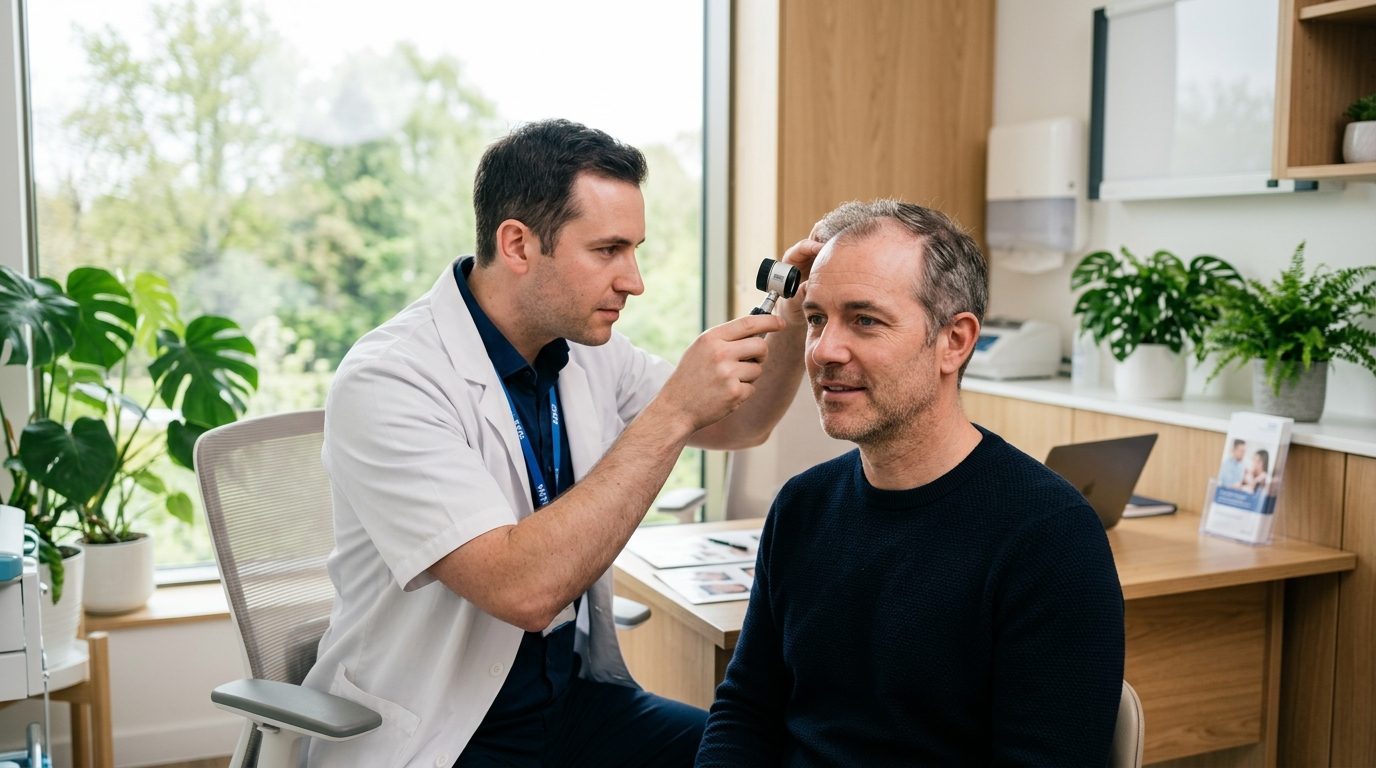
A 5000 grafts hair transplant costs roughly £3,000–£4,200 in Turkey against £13,000–£20,000 in the UK. But the bigger question is whether 5,000 grafts in one session is safe for your donor area. This guide covers the limits, the cost and when two sessions make more sense.
What does a 5,000 graft hair transplant cost?
Five thousand grafts is at the top end of what any single procedure attempts. The price follows the per-session logic of the destinations UK patients use, so the absolute saving against the UK is at its widest here.
| Route | 5,000 grafts | Typical saving vs UK |
|---|---|---|
| Turkey (FUE package) | £3,000–£4,200 | 70–80% |
| Hungary / Poland (EU-regulated) | £4,500–£6,500 | 55–70% |
| Spain | £5,500–£7,500 | 45–60% |
| UK private | £13,000–£20,000 | baseline |
Already have a clinic in mind? See what the official records say about it →
The Turkish figure builds on the 4,000-graft package price plus roughly £650–£1,200 for the extra 1,000 grafts — against £3,000–£5,000 for the same 1,000 in the UK. That is the arithmetic that makes large cases look so much cheaper abroad. Our hair transplant abroad cost guide sets the full ladder and the Turkey cost guide breaks down the destination.
Considering a particular clinic? See what the official records say about it, free →
Ask us about a hair transplant abroad, free
Tell us what you're looking into. We send your enquiry to relevant, pre-vetted clinics, and up to 3 that can help contact you directly.
Thera is free for patients. No clinic can pay to change the prices we publish.
Is 5,000 grafts in one session even possible?
For most people, not safely. This is the point where the honest answer matters more than the price. Grafts come from the permanent donor zone at the back and sides of the scalp, and that supply is finite. A safe single session is usually capped by how much a surgeon can harvest without thinning the donor area, and for many scalps that ceiling sits below 5,000.
A minority of patients with exceptional donor density can support a session near 5,000 grafts. Many cannot. Pushing to 5,000 on an average donor risks a visibly depleted donor area — one of the classic signs of an overharvested, badly planned procedure — and it spends a reserve you may need later, because patterned loss can keep progressing. The International Society of Hair Restoration Surgery (ISHRS) treats protecting the donor zone as central to a durable result, not a detail to trade away for a bigger headline number.
So treat any clinic that offers 5,000 grafts without examining your scalp with real caution. The count is a clinical judgement about your donor supply, not a package you can simply select. Our guide to how many grafts you need explains how the estimate is made from donor density and the area to be covered.
Two sessions instead of one
For extensive loss (around Norwood 6–7), the realistic path is often two sessions rather than one heroic operation. That protects the donor area, gives grafts room to survive, and lets the surgeon place the second round with the first result visible.
Two sessions has cost and timing implications worth planning for:
- Each session is priced roughly as its own procedure, so budget for two package prices, not one giant one.
- Sessions are usually spaced 8–12 months apart, so the first regrowth can settle and the donor recover.
- The full result from the second session lands 12–18 months after it, so the whole plan can run two years or more.
That is a longer road than a single 3,000-graft or 4,000-graft case, but for very advanced loss it is the responsible one.
What 5,000 grafts covers — and its limits
At around 10,000–12,500 hairs, 5,000 grafts can cover a large expanse: a full hairline, mid-scalp and crown for advanced loss. But no transplant creates new donor hair — it only redistributes what you have. On a very bald scalp, even 5,000 grafts spread across the whole head gives coverage that is lighter than a naturally dense head of hair. A surgeon manages expectations here, prioritising the front and mid-scalp where coverage frames the face over the crown, which is greedy for density.
Vetting matters most on the biggest cases
The larger the procedure, the more an unsuitable clinic can cost you. The ISHRS warns specifically about operations where a technician, not a doctor, performs the surgery — and a 5,000-graft session run that way risks both a poor result and a wasted donor supply that cannot be recovered. Confirm the surgeon, technique and graft plan in writing, and agree aftercare before you pay. The NHS does not fund correction of cosmetic work done privately abroad, so vetting is the whole safety net. The Turkey medical tourism guide and our hair transplant safety guide cover the checklist in full.
Frequently Asked Questions
How much does a 5,000 graft hair transplant cost in 2026?
Roughly £3,000–£4,200 in Turkey against £13,000–£20,000 privately in the UK. The Turkish figure is a package including hotel, transfers, medication and aftercare. If your case needs two sessions, budget for two package prices rather than one.
Is 5,000 grafts safe in a single session?
For most people, no. A safe single harvest is limited by donor supply, which for many scalps sits below 5,000 grafts. Only a minority with exceptional donor density can support a session near that number, and only a surgeon can judge it from your scalp.
Will I need two sessions for 5,000 grafts?
Often, for advanced loss around Norwood 6–7. Two sessions spaced 8–12 months apart protect the donor area and let grafts survive. Each is priced as its own procedure, and the full plan can run two years or more from start to final result.
How many hairs is 5,000 grafts?
Roughly 10,000–12,500 hairs, since each graft holds one to four. That can cover a full hairline, mid-scalp and crown, but on a very bald scalp the coverage is lighter than naturally dense hair, because a transplant only redistributes existing donor hair.
Why do clinics warn against overharvesting the donor area?
Because the donor zone is finite and cannot regrow once depleted. Over-harvesting to hit 5,000 grafts leaves the back and sides visibly thin and spends a reserve you may need as loss progresses. The ISHRS treats donor management as central to a durable result.
Clinics UK patients look at
The four with the most Google reviews among the hair transplant clinics we hold. Each has a free page with its records.
 Dr. Serkan Aygin ClinicIstanbul (Şişli), Turkey
 Esteworld Altunizade Surgical ComplexIstanbul (Altunizade, Üsküdar — Asian side), Turkey
 estethica AtaşehirIstanbul (Küçükbakkalköy, Ataşehir — Asian side), Turkey
 Dr. Cinik Hair HospitalIstanbul (Beşiktaş), Turkey
Written by Saher Shodhan
Saher Shodhan is the founder of Thera Travel, which publishes what the official records show about clinics abroad, each fact with the date it was checked, and answers patients' enquiries, free. More about Thera → How we write and check our guides →
Related posts

Hair transplant cost: UK vs Turkey (2026), from clinics' own prices

Cheapest hair transplant abroad (2026): clinics' published prices by country