
Otoplasty (Ear Surgery) Abroad
2026 Cost Guide
Home › Guides › Otoplasty (Ear Surgery) Abroad: 2026 Cost Guide
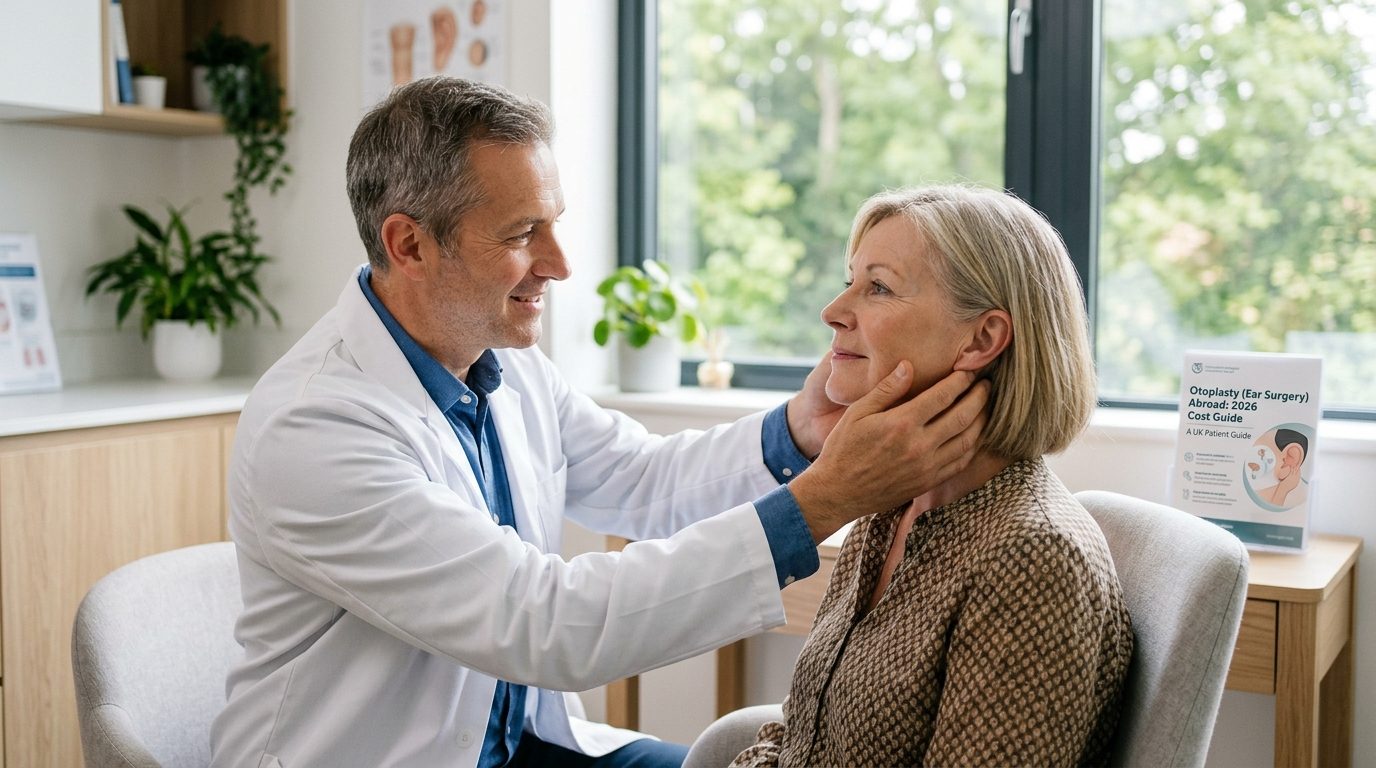
Otoplasty abroad costs from £1,500 in Turkey against £3,000–£4,500 in the UK. This guide covers what ear surgery corrects, honest 2026 prices by country, the note on adults versus children, the recovery timeline, and why it is one of the lower-risk cosmetic operations.
What otoplasty corrects
Otoplasty reshapes or repositions the ears. It most commonly pins back ears that stick out prominently, but it also reshapes the cartilage of a poorly folded ear, reduces ear size, or corrects ears that are asymmetric. The aim is ears that sit in better proportion to the head.
The surgeon works through an incision usually hidden behind the ear, reshaping or scoring the cartilage and using stitches to hold the new position. It is done under local anaesthetic with sedation, or general anaesthetic for children, and takes about one to two hours. Both ears are typically treated in the same sitting, even when only one looks prominent, to keep them symmetrical.
Exactly how the ear is reshaped depends on your anatomy, which your surgeon assesses in person. Treat any fixed online price as a starting point rather than a firm plan.
Ask us about treatment abroad, free
Tell us what you're looking into. We send your enquiry to relevant, pre-vetted clinics, and up to 3 that can help contact you directly.
Thera is free for patients. No clinic can pay to change the prices we publish.
How much does otoplasty cost abroad?
Turkey is the lowest-priced destination and usually bundles hospital, hotel and transfers. Poland and Lithuania cost a little more but come with EU medical regulation. UK private prices are higher because surgeon and facility fees are billed separately.
| Where | Typical 2026 price | UK private | Typical saving |
|---|---|---|---|
| Turkey | £1,500–£2,800 | £3,000–£4,500 | 40–55% |
| Poland / Lithuania | £1,800–£3,000 | £3,000–£4,500 | 35–50% |
| UK private | £3,000–£4,500 | — | — |
Already have a clinic in mind? See what the official records say about it →
These are typical 2026 prices for both ears. Add return flights (UK to Istanbul £100–£250) and a short hotel stay. Because otoplasty is one of the cheaper cosmetic operations, the absolute saving is smaller than for major surgery, so weigh the discount against travel and recovery costs — a point our cosmetic surgery abroad cost guide makes across procedures.
Considering a particular clinic? See what the official records say about it, free →
Adults and children — a note on age
Otoplasty is performed on both adults and children, but the age of the patient changes the picture, and it is worth understanding before you book travel.
Ear cartilage is largely formed by around five or six years of age, which is why the NHS and surgeons generally do not operate on younger children. Where prominent ears cause a child distress, surgery is usually considered from about the age of five onwards, under general anaesthetic. For adults, the cartilage is firmer, the procedure is straightforward under local anaesthetic, and the result is stable.
If you are considering otoplasty for a child abroad, weigh the practicalities carefully: a child needs general anaesthetic, more careful aftercare, and a longer settled recovery before flying. Many families find the case for travelling with a child weaker than for an adult treating themselves. Whatever the age, the surgeon should assess suitability in person; do not let a clinic pressure the decision, which the Advertising Standards Authority's rules on cosmetic advertising exist to prevent.
Recovery and fit-to-fly
A padded head bandage protects the ears for the first week, after which many surgeons switch you to a headband worn at night for several weeks to hold the new position while healing sets. Expect swelling, bruising and tenderness around the ears, with the ears feeling numb or sensitive for a while. Painkillers usually manage the discomfort.
Most adults return to desk work within about a week and to full activity, including exercise and contact sport, at four to six weeks once the cartilage has settled. You will avoid sleeping on your side and knocking the ears during the early weeks.
Otoplasty is minor compared with body surgery, and because it does not involve the trunk or legs the deep-vein-thrombosis risk is low. Even so, you want the surgeon to check the ears and change the dressing before you fly, so plan to stay two to four days rather than flying home immediately. Get a fit-to-fly sign-off. The British Association of Aesthetic Plastic Surgeons (BAAPS) has warned generally about UK patients travelling home too soon after surgery abroad.
Arrange follow-up at home in case of a problem. The NHS does not fund correction of private cosmetic surgery done abroad, though it will treat a genuine emergency, so agree revision terms with the clinic in writing.
A lower-risk cosmetic procedure
Otoplasty is one of the more predictable and lower-risk cosmetic operations. It works on cartilage near the surface rather than inside a body cavity, it uses local anaesthetic for adults, and recovery is quicker than for a facelift or body contouring. Complications are uncommon and usually minor, though as with any surgery there is a risk of infection, asymmetry or the ears drifting back over time.
Lower risk is not zero risk, and it is still real surgery that deserves proper vetting. Confirm the surgeon is a qualified, experienced plastic surgeon rather than a general doctor, and ask how often they perform otoplasty. In the UK the General Medical Council (GMC) keeps a specialist register you can check; abroad, ask for equivalent credentials and recognised clinic accreditation such as JCI. Our plastic surgery safety guide covers the checks, and the Turkey medical tourism guide covers that destination. For other facial work abroad, see our facelift abroad cost guide and neck lift abroad cost guide.
Frequently Asked Questions
How much does otoplasty cost abroad?
Otoplasty is typically £1,500–£2,800 in Turkey and £1,800–£3,000 in Poland or Lithuania for both ears, against £3,000–£4,500 in the UK, a saving of about 40–55%. Because it is a cheaper operation, weigh that discount against flights and a short recovery stay.
At what age can a child have otoplasty?
Ear cartilage is largely formed by around five or six, so surgery is usually considered from about age five onwards, under general anaesthetic, where prominent ears cause a child distress. Younger children are generally not operated on. A surgeon assesses each child's suitability in person.
How long is recovery after otoplasty?
A head bandage is worn for the first week, then often a night headband for several weeks. Most adults return to desk work within a week and to full activity at four to six weeks. You avoid sleeping on your side and knocking the ears early on.
Is otoplasty a low-risk operation?
It is one of the more predictable cosmetic operations, working on surface cartilage under local anaesthetic for adults, with a low deep-vein-thrombosis risk. But it is still surgery, with a small risk of infection, asymmetry or the ears drifting back, so it deserves proper surgeon vetting.
How soon can I fly home after otoplasty?
Plan to stay two to four days so the surgeon can check the ears and change the dressing, and get a fit-to-fly sign-off. The clot risk is low because the trunk and legs are not involved, but BAAPS still advises against travelling home too soon after surgery abroad.
Will the NHS fix an otoplasty done abroad?
No. The NHS does not fund correction of private cosmetic surgery performed abroad, though it will treat a genuine emergency. Agree revision terms with your clinic in writing and arrange UK follow-up before you travel.
Written by Saher Shodhan
Saher Shodhan is the founder of Thera Travel, which publishes what the official records show about clinics abroad, each fact with the date it was checked, and answers patients' enquiries, free. More about Thera → How we write and check our guides →
Related posts
Cross Border Directive: how to get the HSE to refund treatment abroad
Hip and knee replacement abroad from Ireland: costs, waits and HSE refunds