

Women's Hair Transplant
Cost & Suitability (2026)
Home › Guides › Women's Hair Transplant: Cost & Suitability (2026)
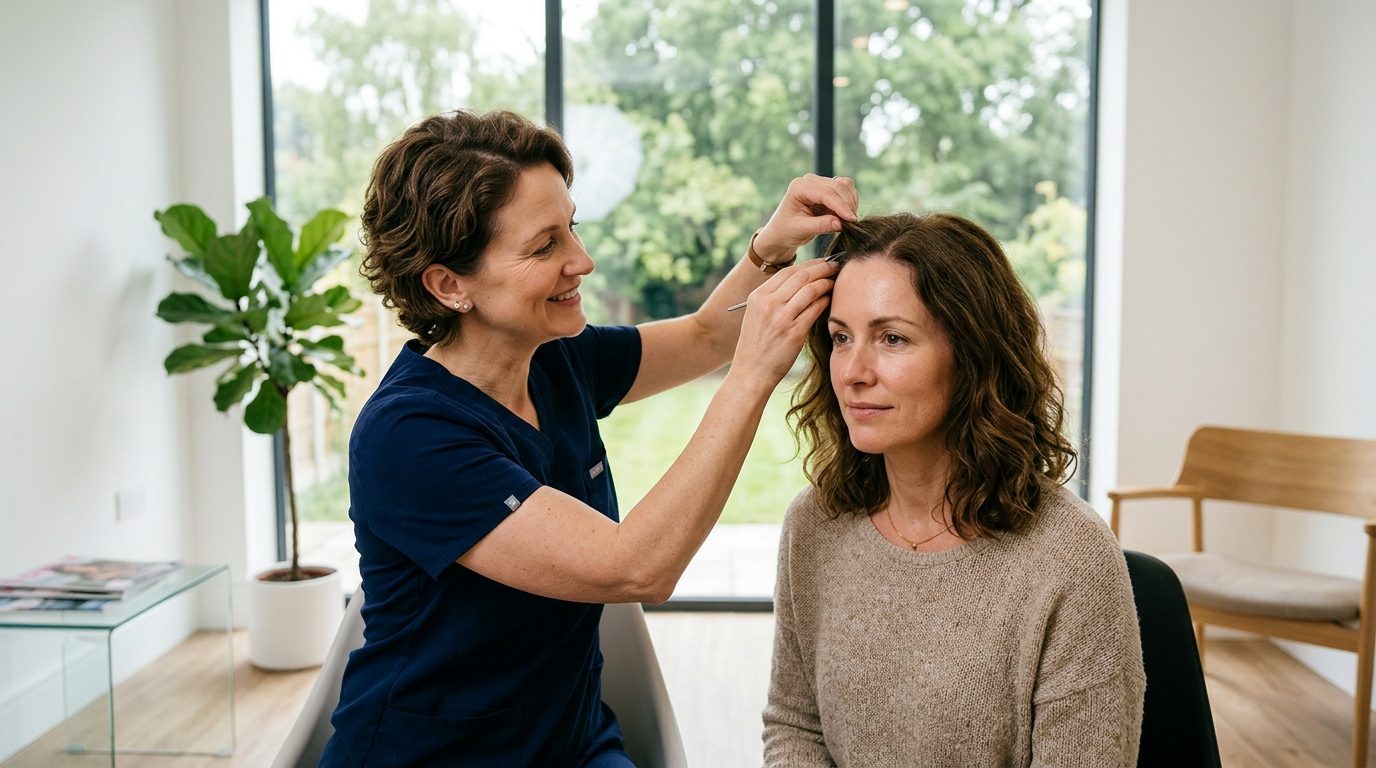
A women's hair transplant abroad costs £1,600–£3,400 in Turkey, against £6,000–£17,000 in the UK. Female hair loss differs from male loss, so not everyone is a candidate. This guide covers 2026 prices, who suits surgery, unshaven options, and why assessment matters.
How much does a women's hair transplant cost?
A women's hair transplant uses the same follicular unit extraction (FUE) method as a man's, and it is priced the same way: by the graft, with the country setting the base rate. Turkey is where most UK patients travel. Female cases sometimes cost a little more because many women choose an unshaven technique, which is slower to perform.
| Grafts | Turkey | UK private | Typical saving |
|---|---|---|---|
| 2,000 (FUE) | £1,600–£2,000 | £6,000–£8,000 | 65–75% |
| 3,000 (FUE) | £2,000–£2,600 | £8,000–£12,000 | 70–80% |
| 4,000+ (FUE) | £2,600–£3,400 | £11,000–£17,000 | 70–80% |
Already have a clinic in mind? See what the official records say about it →
An unshaven procedure typically adds £300–£800 in Turkey, more in the UK. Turkish packages usually include a hotel, transfers, medication and aftercare. For the wider comparison, see our hair transplant abroad cost guide and the Turkey cost breakdown.
Considering a particular clinic? See what the official records say about it, free →
Ask us about a hair transplant abroad, free
Tell us what you're looking into. We send your enquiry to relevant, pre-vetted clinics, and up to 3 that can help contact you directly.
Thera is free for patients. No clinic can pay to change the prices we publish.
Why female hair loss is different
Male pattern loss usually follows a predictable path: a receding hairline and thinning crown, with the back and sides kept as a stable donor zone. Female loss rarely works that way. Women more often experience diffuse thinning spread across the whole scalp, including the donor area at the back and sides.
That distinction decides whether surgery will even work. A hair transplant only moves existing hair from one place to another. If the donor area is also thinning, there may not be a stable supply to move, and taking grafts from a shrinking donor zone can make thinning there more obvious. This is the central reason a women's hair transplant needs a careful assessment rather than an assumption that it will help.
Female hair loss also has more reversible causes than male loss. Thyroid problems, iron deficiency, hormonal changes, certain medications and telogen effluvium after stress or illness can all thin the hair, and several of those respond to treatment. A good surgeon investigates the cause before recommending surgery, because a transplant does nothing for loss that a blood test could have explained.
Who suits a women's hair transplant
Surgery tends to suit women with a defined, stable pattern of loss and a healthy donor area. Common candidates include:
- A high or receding hairline that a woman wants brought forward, with good donor density behind it.
- Traction alopecia from years of tight styles, once the pulling has stopped and the loss has stabilised.
- Scarring or gaps from injury, surgery or previous cosmetic procedures.
- A specific thinning zone with a stable donor area to draw from.
It is less likely to suit diffuse, all-over thinning where the donor area is also affected, or active loss that has not been investigated. In those cases a surgeon may recommend medical treatment or simply advise waiting. Deferring to that judgement is the honest answer, even when it is not the one a patient hoped for.
Unshaven and partial-shave options
Many women want to avoid shaving the scalp, and clinics offer techniques that suit this. An unshaven FUE (sometimes called U-FUE) takes grafts without shaving the donor area, so existing long hair covers it throughout. A partial shave trims only a small hidden strip that surrounding hair conceals.
Both are more time-consuming than a fully shaven procedure, which is why they cost more and why not every clinic offers them for larger cases. If keeping your hair length matters, confirm at consultation that the clinic can do the graft count you need without a full shave.
Realistic expectations and vetting
A transplant redistributes hair, it does not create new density from nothing, and it does not stop future loss. Set expectations against your donor supply, not against a photo of someone else's result. The final outcome settles at 12 to 18 months.
The vetting is the same as for any procedure abroad. Confirm a qualified surgeon leads and performs the surgery, get the graft count and technique in writing, and agree an aftercare plan before you pay. The International Society of Hair Restoration Surgery (ISHRS) warns about technician-run clinics where a non-doctor performs the procedure, and it is worth confirming the clinic assesses the cause of your loss rather than booking you straight in. The NHS will not fund correction of a cosmetic procedure done privately abroad, so your checks beforehand are the whole safety net. Our hair transplant safety guide and the Turkey medical tourism guide cover the full checklist.
Frequently Asked Questions
How much does a women's hair transplant cost in 2026?
Most UK patients pay £1,600–£3,400 in Turkey depending on graft count, against £6,000–£17,000 privately in the UK. An unshaven technique, which many women choose, typically adds £300–£800 in Turkey. Packages usually include hotel, transfers and aftercare, so the saving against the UK runs into thousands.
Can women have hair transplants?
Yes, but not all women are candidates. Surgery suits a defined, stable pattern of loss with a healthy donor area, such as a high hairline or traction alopecia. It suits diffuse all-over thinning less well, because taking grafts from a thinning donor zone can worsen it. A proper assessment decides suitability.
Why is female hair loss assessed differently?
Female loss is often diffuse and can affect the donor area itself, and it has more reversible causes than male loss, including thyroid problems, iron deficiency and hormonal changes. A good surgeon investigates the cause first, because a transplant does nothing for loss that a blood test could explain and treatment could reverse.
Can I have a hair transplant without shaving my head?
Often, yes. Unshaven FUE takes grafts without shaving the donor area, so existing long hair covers it, and a partial shave trims only a small hidden strip. Both cost more and take longer than a full shave, and not every clinic offers them for larger cases, so confirm this at consultation.
Will a transplant stop my hair from thinning further?
No. A transplant redistributes existing hair, it does not stop future loss or create new density. If your loss is still active, a surgeon may recommend medical treatment alongside or instead of surgery. Set expectations against your own donor supply, and expect the final result at 12 to 18 months.
Will the NHS help if my hair transplant abroad goes wrong?
No. The NHS does not fund correction of cosmetic procedures done privately abroad. A written aftercare plan and thorough vetting of the surgeon and clinic before you book are your only real safety net, which is why we recommend reading the safety guide before committing.
Clinics UK patients look at
The four with the most Google reviews among the hair transplant clinics we hold. Each has a free page with its records.
 Dr. Serkan Aygin ClinicIstanbul (Şişli), Turkey
 Esteworld Altunizade Surgical ComplexIstanbul (Altunizade, Üsküdar — Asian side), Turkey
 estethica AtaşehirIstanbul (Küçükbakkalköy, Ataşehir — Asian side), Turkey
 Dr. Cinik Hair HospitalIstanbul (Beşiktaş), Turkey

Written by Saher Shodhan
Saher Shodhan is the founder of Thera Travel, which publishes what the official records show about clinics abroad, each fact with the date it was checked, and answers patients' enquiries, free. More about Thera → How we write and check our guides →
Related posts

Hair transplant cost: UK vs Turkey (2026), from clinics' own prices

Cheapest hair transplant abroad (2026): clinics' published prices by country