

Why consultant waiting times vary
A guide for patients
Home › Guides › Why consultant waiting times vary: a guide for patients

Consultant waiting times in England vary because three things interact: the official rules that define and record a wait (the Referral to Treatment framework and the 2-week urgent suspected cancer pathway), the clinical priority of your condition, and the real-world capacity of the trust treating you. The NHS waiting times guide sets a maximum of 18 weeks from GP referral to the start of consultant-led treatment for non-urgent care, but that standard is applied differently depending on where you live, what you need, and how your referral was routed.
The main reasons your wait may differ from someone else’s:
- Clinical priority. Urgent and suspected cancer cases are fast-tracked; elective conditions are scheduled by clinical need, not the order referrals arrive.
- Treatment type and specialty. Orthopaedics, neurology, and gynaecology consistently carry longer waits than, say, dermatology, because of theatre time, diagnostic demands, and bed requirements.
- Where your care is provided. Trust-level capacity, staffing, and theatre availability vary enormously across England, often more than the difference between specialties nationally.
- How your referral clock started. Whether your wait is recorded from a GP referral, an NHS e-Referral booking, or an onward referral via an interface service changes the official start date.
- Legitimate clock pauses. Patient choice to delay, clinician-recommended delays, and active monitoring can all stop or reset the 18-week clock without any administrative error.
The most useful immediate step is to check your trust’s published RTT data, confirm your clock has started, and ask your GP about alternative providers if your wait is already long. The sections below explain each driver in detail.
Key takeaways
NHS consultant waiting times in England vary because RTT clock rules, clinical priority, local trust capacity, and referral pathways all interact to produce different recorded waits for different patients.
| Point | Details |
|---|---|
| 18-week standard has exceptions | The NHS Constitution right to treatment within 18 weeks does not apply if you chose to delay, a clinician recommended delay, or you are on active monitoring. |
| Trust matters as much as specialty | Trust-level variation in waits is often wider than the national spread between specialties; switching provider via Right to Choose can cut months off your wait. |
| National performance is below target | In February 2026, only 62.5% of patients had been waiting less than 18 weeks for elective treatment, according to Nuffield Trust analysis. |
| Check your clock first | Confirm your RTT clock has started and which pathway you are on before drawing conclusions from published median figures. |
| Check any overseas clinic yourself | If you look abroad, check the clinic’s official register entry, the surgeon’s registration and the full set of reviews before you pay a deposit. |
Already have a clinic in mind? See what the official records say about it →
Ask us about treatment abroad, free
Tell us what you're looking into. We send your enquiry to relevant, pre-vetted clinics, and up to 3 that can help contact you directly.
Thera is free for patients. No clinic can pay to change the prices we publish.
Table of Contents
- How are consultant waiting times officially defined and measured?
- How does treatment type and clinical priority affect your wait?
- Why does your location affect how long you wait?
- How do referral pathways and clock rules change your recorded wait?
- What are your rights, and what can you do if your wait is too long?
- Where can you check current waiting times and what do the figures mean?
- What are your options if you cannot wait?
- The gap between what the data promises and what patients actually experience
- How to check an overseas clinic before you book
- Sources
How are consultant waiting times officially defined and measured?
The term “waiting time” in the NHS has a precise legal meaning, and understanding it helps you interpret the figures you see published online.
Referral to Treatment (RTT) is the official framework that measures how long patients wait from the point of referral to the start of consultant-led treatment. Under the NHS Constitution, patients have a right to start non-urgent consultant-led treatment within 18 weeks of referral. That right applies to most planned care but not to all pathways, and several legitimate exceptions can mean the 18-week clock does not apply to your case.
Separate from RTT, the 2-week urgent suspected cancer pathway operates on a different basis entirely. If a GP suspects cancer, they can refer you for a specialist appointment within two weeks. This pathway is not part of the standard RTT framework and is tracked separately, with its own targets and reporting.
When does the RTT clock start and stop?
The Gov sets out the national framework, though local clinical judgement is applied to individual cases.
Clock starts when:
- A GP or other referrer sends a referral to a consultant-led service.
- A patient books an appointment through the NHS e-Referral Service.
- An onward referral is made from an interface or referral management service where further consultant-led treatment is possible.
Clock stops when:
- A decision to treat is made and treatment begins.
- A decision is made that treatment is not required.
- A patient chooses to wait longer than the offered appointment.
- A clinician judges that a delay is in the patient’s best clinical interest (an “active monitoring” decision).
- A patient fails to attend two reasonable appointment offers.
A typical pathway looks like this:
- GP makes referral, clock starts.
- Referral received by trust or NHS e-Referral Service.
- Outpatient appointment takes place.
- Decision to treat is made, or active monitoring begins.
- Clock stops at the point treatment starts, or resets if a new treatment decision is made.
Three RTT pathway types appear in the monthly data published by NHS England:
- Admitted pathways: patients who needed an inpatient or day-case admission for treatment.
- Non-admitted pathways: patients whose treatment was completed without admission (for example, outpatient procedures).
- Incomplete pathways: patients still waiting at the point the data was collected. This is the figure most relevant to someone currently on a waiting list.
NHS England moved to a dashboard format for RTT publication from late 2025, making it easier to track trends and compare trusts over time rather than relying on static monthly snapshots.
How does treatment type and clinical priority affect your wait?
The NHS does not operate a first-come, first-served queue.
Urgent cases are seen fastest. A patient referred urgently with symptoms suggesting a serious neurological condition, for example, will be prioritised ahead of someone referred electively for a knee replacement. The 2-week cancer pathway sits above all standard RTT pathways in terms of priority.
Elective conditions are where the longest waits accumulate. Specialties that consistently see waits beyond the 18-week standard include:
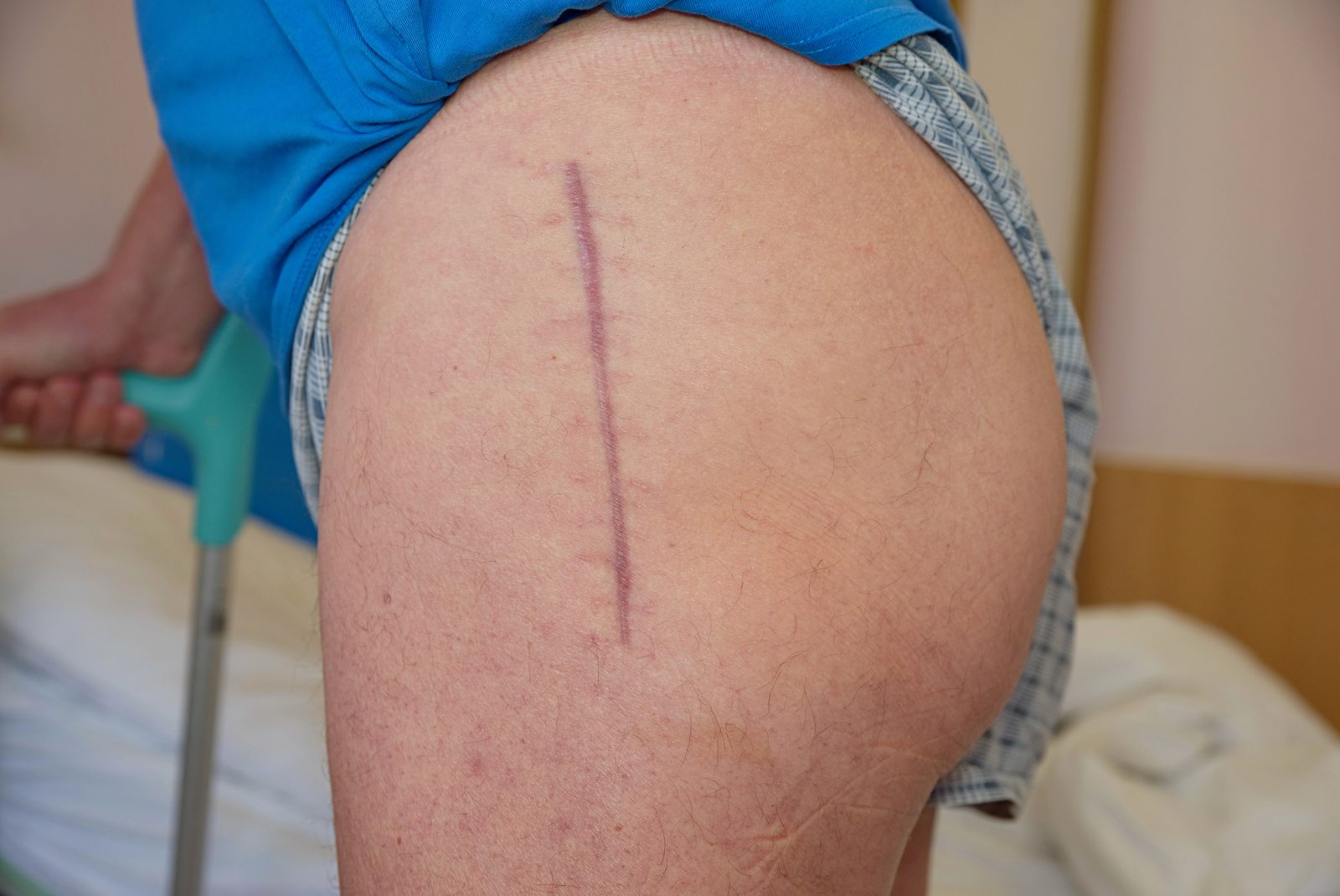
- Orthopaedics (hip and knee replacements, spinal surgery): high demand, long theatre times, and significant post-operative bed requirements. NHS hip replacement waits currently run to 18–24 months in many trusts; spinal surgery waits can reach 18 months to three years.
- Neurology: complex diagnostics, limited consultant numbers, and high referral volumes.
- Gynaecology: a combination of high demand and limited theatre capacity.
- ENT (ear, nose and throat): high referral volumes relative to consultant supply.
- Plastic and reconstructive surgery: a mix of urgent and elective demand competing for the same theatre lists.
Health Foundation linked-data analysis shows that waits also vary by population group and specialty, with patients from more deprived areas and some ethnic groups more likely to experience waits beyond 18 weeks. That is not a reflection of clinical priority rules working as intended; it reflects structural inequalities in how demand meets capacity across different communities.
Patients on active monitoring pathways, where a clinician has decided that waiting is itself the appropriate clinical management, may find their 18-week clock is paused or reset. This is a legitimate clinical decision, not an administrative delay, and it means the recorded wait does not reflect the full time a patient has been under a consultant’s care.
Clinical exceptions also apply when a patient’s overall health means that treating them sooner would carry greater risk than waiting. A patient awaiting optimisation of a cardiac condition before joint replacement surgery, for instance, may have their clock stopped by clinical agreement. The NHS waiting times guide explains these exceptions clearly.
Why does your location affect how long you wait?
Two trusts 20 miles apart can have median waits that differ by months for the same procedure. That gap is not random; it reflects structural differences in local capacity that have built up over years.
System pressures that drive local variation
- Staffing shortages. Surgeon, anaesthetist, and nursing shortages directly reduce the number of lists a trust can run. The Royal College of Anaesthetists has documented that anaesthetist shortages have caused over a million patients to miss out on treatment, with the shortage continuing to grow.
- Theatre and bed availability. A trust with fewer operating theatres relative to its catchment population will accumulate a backlog faster than one with spare capacity.
- Diagnostic bottlenecks. MRI, CT, and endoscopy capacity constrain how quickly patients move from referral to a treatment decision, even when surgical capacity is available.
- Backlog recovery funding. Trusts that received targeted investment for elective recovery have reduced their longest waits faster than those without it.
- Seasonal pressures. Winter emergency demand regularly displaces elective capacity, adding weeks to waits for planned procedures.
Integrated Care Systems (ICSs) now hold responsibility for planning elective capacity across their geography. How an ICS allocates recovery funding, manages referral flows between trusts, and commissions additional capacity directly shapes the wait a patient in that area experiences. NHS England’s 2025–26 operational planning guidance sets out the national priorities ICSs are expected to deliver against, including elective recovery targets.
According to Nuffield Trust analysis, in February 2026 only 62.5% of patients had been waiting less than 18 weeks to start elective treatment nationally. That figure masks wide trust-level variation: some trusts are meeting the 18-week standard for most specialties while others are not close to it for any.
Statistic to note: Trust-level differences often explain more of the variation a patient experiences than national specialty medians. Analysis by HospitalWaits finds that choosing the right trust is one of the biggest levers patients actually control.
Persistent underperformers tend to share structural characteristics: a higher proportion of complex cases, lower theatre productivity per surgeon-day, and longer outpatient follow-up models that consume capacity needed for new referrals. These are not problems that resolve quickly, which is why some trusts have sat at the slow end of national rankings for years.
How do referral pathways and clock rules change your recorded wait?
The national RTT rules set a consistent framework, but the pathway your referral takes before it reaches a consultant can significantly change when your clock officially starts.
Scenarios that start a consultant-led clock
- A GP refers you directly to a named consultant or consultant-led service: clock starts on the date the referral is received.
- You book through the NHS e-Referral Service: clock starts when the booking is made or the referral is received, whichever is earlier.
- Your GP refers you to an interface service (a triage or assessment service sitting between primary and secondary care): if that service can onward-refer you to a consultant, the clock starts from the original referral date, not from the date of onward referral.
- A referral management service reviews your referral and redirects it: the clock still starts from the original referral, provided onward referral to a consultant is possible.
The GOV.UK rules suite is the authoritative source for borderline cases, and it explicitly states that local clinical judgement should be applied when the rules do not cover a specific scenario precisely.
Three practical scenarios
-
Onward referral via an interface service. Your GP refers you to a musculoskeletal triage service. That service assesses you and refers you on to an orthopaedic consultant. Your RTT clock started when the GP made the original referral, not when the triage service passed you on. Your recorded wait will be longer than the time you have been under the orthopaedic team.
-
Active monitoring pauses the clock. You are referred to a gastroenterology consultant who decides watchful waiting is appropriate for six months. The clock stops at the point of that clinical decision. If your condition changes and a new treatment decision is made, a new clock starts from that point.
-
A new treatment starts a new clock. You complete treatment for one condition and are then referred for a related but distinct procedure. That second referral starts an entirely new RTT clock, even if the same consultant is involved.
Understanding which scenario applies to you is the fastest way to make sense of a wait that seems longer or shorter than you expected. If you are unsure, ask the hospital’s patient administration team which pathway you are on and when your clock started. For background on how referral management services and onward referrals interact with RTT, our guide to why doctors refer patients abroad covers referral pathway logic in accessible terms.
What are your rights, and what can you do if your wait is too long?
The NHS Constitution gives you a right to start consultant-led treatment within 18 weeks of referral for non-urgent planned care. If a reasonable offer of treatment cannot be made within that timeframe, you have the right to be offered treatment at an alternative provider, which may be a different NHS trust or an independent sector provider commissioned by the NHS.
Steps to take if your wait is long
- Confirm your clock has started. Contact the hospital’s patient administration team or check your NHS e-Referral account to verify the referral was received and a clock is running.
- Ask which pathway you are on. Confirm whether you are on an admitted, non-admitted, or incomplete pathway, and whether any clock pauses apply to your case.
- Request an alternative provider. Under the NHS Right to Choose, you can ask your GP to refer you to a different trust if your current trust cannot offer treatment within 18 weeks. This is a legal right, not a discretionary favour.
- Contact PALS. The Patient Advice and Liaison Service at your trust can investigate delays, explain your position on the waiting list, and escalate concerns on your behalf.
- Keep written records. Note the date and content of every conversation with your GP, hospital, or PALS. If a dispute arises about when your clock started or whether a reasonable offer was made, written records are your evidence.
When the 18-week right does not apply
The NHS waiting times guide sets out the main exceptions:
- You chose to wait longer than the offered appointment date.
- Your clinician recommended a delay because it is in your best clinical interest.
- You are on an active monitoring pathway where waiting is the treatment.
- You failed to attend two reasonable appointment offers without a valid reason.
Research published in BMC Health Services Research suggests that patients’ willingness to wait is strongly influenced by whether they feel informed and valued. Proactive communication from the trust, including an explanation of where you are in the queue and what to expect, can reduce frustration significantly even when the wait itself cannot be shortened.
Pro Tip: When you speak to your GP or hospital, ask three specific questions: “Has my RTT clock started?”, “Which pathway am I on?”, and “What is the current median wait for my specialty at this trust?” Write down the answers with the date and the name of the person you spoke to. That record protects you if your wait later exceeds 18 weeks and you need to invoke your Right to Choose.
Where can you check current waiting times and what do the figures mean?
Published waiting-time data is more accessible than it used to be, but the figures require some interpretation before they are useful to your individual situation.
Reliable sources to check
- NHS waiting times guide (NHS.co.uk): — explains your rights and how to act on them.
- HospitalWaits analysis: — independent analysis of trust-level variation, useful for comparing your trust against others in your region.
You can also use the NHS waiting list calculator to estimate your likely wait for common procedures and compare it against private or overseas options.
What the data shows and how to use it
| Source | What it shows | How to use it |
|---|---|---|
| NHS e-Referral Service | Your personal referral and booking status | Confirm your clock has started and check appointment offers |
| NHS England RTT dashboard | National and trust-level pathway data by specialty | Compare your trust’s performance against the national picture |
| Trust RTT dashboard | Specialty median waits at your specific trust | Understand the realistic wait for your procedure locally |
| HospitalWaits analysis | Trust-level variation and rankings | Identify whether switching trust could shorten your wait |
One important caveat: published medians are averages across all patients on a pathway at a given point. Your individual wait may be shorter or longer depending on your clinical priority, when your clock started, and whether any pauses apply. A trust reporting a 14-week median for orthopaedics may still have individual patients waiting 40 weeks if the distribution is skewed by a backlog of complex cases.
For patients who want to triage their symptoms before a referral or prepare information for their GP, tools reviewed in this analysis of NHS symptom checker alternatives can help you arrive at a GP appointment with a clearer picture of your condition.
What are your options if you cannot wait?
If your NHS wait is clinically or personally unacceptable, three broad routes exist. Each involves trade-offs.
NHS alternative providers via Right to Choose
This is the lowest-friction option. Ask your GP to refer you to a different NHS trust or an independent sector provider commissioned by the NHS. You stay within the NHS framework, your care is free at the point of use, and your RTT clock continues. The limitation is that capacity at alternative providers varies, and in some specialties the wait at every trust in your region may be similarly long.
Private care in the UK
Private treatment removes you from the NHS waiting list for that episode of care. You pay directly or through private health insurance. Speed is the main advantage; continuity of care and follow-up within the NHS can be complicated if complications arise, so it is worth discussing the plan with your NHS consultant before booking.
Overseas treatment
For procedures where the cost of private UK care is prohibitive, overseas treatment at a properly checked clinic is a legitimate option for many patients. The key safety checks before booking any overseas procedure:
- Verify the clinic holds accreditation from a recognised international body (such as JCI accreditation or equivalent national health authority registration).
- Confirm the surgeon is registered with the relevant national medical regulator and has verifiable specialist credentials.
- Obtain a written treatment plan and a written aftercare plan before committing.
- Confirm what happens if complications arise after you return to the UK, and whether your NHS GP has been informed.
- Check whether your travel insurance covers medical complications related to elective procedures abroad.
The trade-offs are real: overseas treatment can be significantly faster and cheaper than private UK care, but travel logistics, language barriers, and the distance from your usual NHS team require careful planning. The risks of delaying decompression surgery illustrates why, for some spinal conditions, the clinical cost of a long wait may outweigh the logistical complexity of travelling abroad.
Always inform your GP and NHS consultant before booking any private or overseas procedure. Your NHS team needs to know what treatment you have had to ensure follow-up care is clinically coherent and any complications are managed safely.
The gap between what the data promises and what patients actually experience
Long waits are a structural feature of the NHS at present, not a sign that your case has been forgotten or mishandled. The system is operating under sustained pressure that has built up over more than a decade, and the Nuffield Trust’s analysis makes clear that recovery to the 18-week standard across all specialties remains a long-term project, not an imminent fix.
What I think patients underestimate is how much agency they actually have within the system. The Right to Choose is a legal right, not a suggestion, and trust-level variation is wide enough that switching provider can cut months off a wait for the same procedure. Most patients do not know to ask, and most trusts do not volunteer the information. The published RTT data exists precisely so patients can make that comparison, but it only helps if you know where to look and what questions to ask.
The other thing worth saying plainly: overseas treatment, at a properly checked clinic and with full GP involvement, is not a last resort for desperate patients. For elective orthopaedic procedures in particular, the combination of shorter waits, lower costs, and high-quality care at accredited international centres is a rational choice for many people. The safety question is not whether to consider it, but how to evaluate it rigorously. That means register checks, written aftercare plans, and an honest conversation with your GP before you book anything.
How to check an overseas clinic before you book
Waiting 18 months or more for an orthopaedic procedure is not just inconvenient; for many patients it means months of pain, reduced mobility, and deteriorating quality of life. If you decide to look abroad, the clinic matters more than the country. Before you book:
- Find the clinic’s entry on its country’s official register of healthcare providers, under the legal name shown on the quote.
- Get the surgeon’s full name in writing and look them up on their professional register.
- Read the Google reviews, including the low-rated ones, and check that the listing belongs to the actual hospital, not an agency.
- Get the quote itemised in writing, showing what is included and what is not.
- Ask what happens if something goes wrong once you are home, and who pays.
Clinics will usually ask for your GP referral letter, diagnosis and any imaging before they quote. Discuss your plan with your GP before booking so your NHS records are up to date and follow-up care is agreed in advance. Our 15 questions to ask a clinic cover the rest.
Thera Travel does not recommend or book treatment. You can look up a clinic and see what the records say, free.
For patients exploring spinal options specifically, the endoscopic spine surgery abroad and laminectomy surgery abroad pages explain the procedures, indicative pricing, and what packages usually include. Prices change, so ask each clinic for current figures in writing.
Sources
- Guide to NHS waiting times in England - NHS
- Gov
- Statistics » Referral to Treatment (RTT) Waiting Times — NHS England
- Elective (planned) treatment waiting times | Nuffield Trust
- The elective care waiting list: insights from linked data | The Health Foundation
This article provides general information about NHS waiting times in England and is not a substitute for advice from your GP, consultant, or a qualified healthcare professional. Confirm current rules and your individual pathway with your NHS team or the relevant primary source.
Recommended
- Why Doctors Refer Patients Abroad: A 2026 Guide
- NHS Spinal Surgery Waiting Time 2026: 18 Months to 3 Years
- NHS Waiting List Calculator
- NHS Hip Replacement Waiting Time 2026: 18–24 Months

Written by Saher Shodhan
Saher Shodhan is the founder of Thera Travel, which publishes what the official records show about clinics abroad, each fact with the date it was checked, and answers patients' enquiries, free. More about Thera → How we write and check our guides →
Related posts

Cross Border Directive: how to get the HSE to refund treatment abroad
Hip and knee replacement abroad from Ireland: costs, waits and HSE refunds