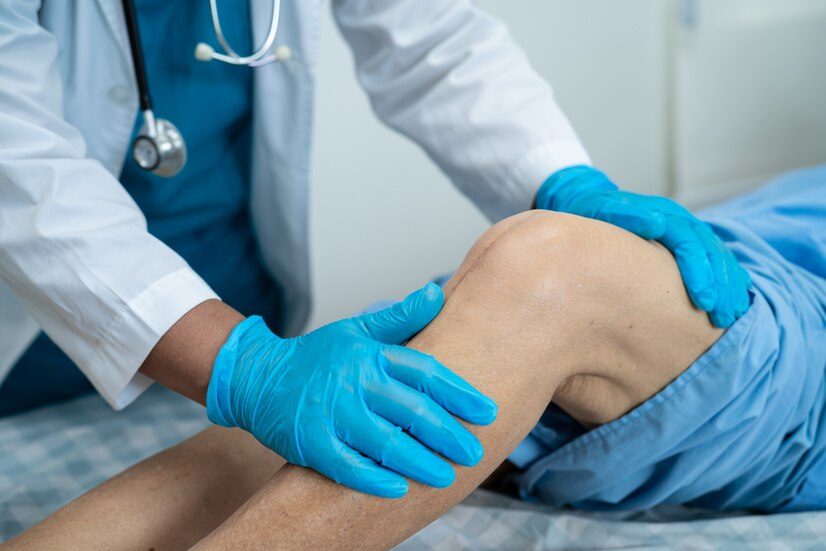

Travelling After Knee Surgery
Everything You Need To Know
Home › Guides › Travelling After Knee Surgery: Everything You Need To Know
The Royal Orthopaedic Hospital, an NHS trust in Birmingham, advises waiting 3 months after a knee replacement before any journey longer than 4 hours, and no long-haul flight (over 4 hours) within 4 weeks of any surgery (page read 9 Nov 2026) [1]. Your surgeon decides when you are fit to fly, so ask for it in writing.
Last checked 9 Nov 2026: every NHS page quoted here was read that day. Written by Saher Shodhan. This guide quotes NHS sources and is general information, not medical advice. Sources are numbered at the end.
What NHS sources say about travelling after a knee replacement
| Source | What it says | Read |
|---|---|---|
| Royal Orthopaedic Hospital NHS Foundation Trust, Birmingham | After a hip or knee replacement, wait 3 months before journeys longer than 4 hours. No long-haul flight (longer than 4 hours) for at least 4 weeks before or after any type of surgery. Travel socks may be advised for long journeys 1 to 2 months after surgery. | 9 Nov 2026 [1] |
| NHS: recovering from a knee replacement | You'll usually leave hospital 1 to 4 days after the operation, with compression stockings to prevent blood clots. Most people wear them for at least 6 weeks. The follow-up appointment is about 6 weeks after the operation. | 9 Nov 2026 [2] |
| NHS: deep vein thrombosis (DVT) | Having, or having had, surgery and a long journey of more than 4 hours by plane, car or train both make a clot more likely. After surgery, "a blood clot can happen weeks later". | 9 Nov 2026 [3] |
Already have a clinic in mind? See what the official records say about it →
Each NHS page as read on 9 Nov 2026 [1] [2] [3]. We found no NHS figure for how soon you can take a short flight after a knee replacement: ask your surgeon.
The reason for the wait is the risk of a blood clot in the leg (DVT). Surgery and a long journey each raise it, and the risk lasts for weeks after the operation [3]. Count the whole journey door to door, including the drive to the airport and the wait at the gate, not just the time in the air.
Ask us about an operation abroad, free
Tell us what you're looking into. We send your enquiry to relevant, pre-vetted clinics, and up to 3 that can help contact you directly.
Thera is free for patients. No clinic can pay to change the prices we publish.
Can you travel after knee replacement surgery?
Yes, once your surgeon says you are fit to. How long that takes depends on your recovery and the journey. For journeys longer than 4 hours, the Royal Orthopaedic Hospital's advice is to wait 3 months [1]. Tell your surgeon about any trip you are planning, and tell your airline or travel company about your operation: the Royal Orthopaedic Hospital asks patients to do both [1].
How long should you wait before flying after knee surgery?
- Knee replacement, flight over 4 hours: wait 3 months, in the Royal Orthopaedic Hospital's advice [1].
- Any operation, long-haul flight: not within 4 weeks before or after surgery [1]. This covers keyhole knee surgery (arthroscopy) too.
- Shorter flights: we found no NHS figure. Your surgeon decides.
The Royal Orthopaedic Hospital's advice covers hip and knee replacements and does not give a separate figure for a partial knee replacement [1]. For driving, the NHS says to wait at least 6 weeks after a total knee replacement or 3 weeks after a partial one, and to check with your doctor that you are fit to drive [2]. If your surgeon says you are fit to fly, ask them to put it in writing.
Will a knee implant set off airport security?
It might. Tell the security officer about your knee replacement before you go through the scanner, and allow extra time at the airport.

Do you need to declare a knee replacement to your insurer?
Ask your insurer before you book, and get the answer in writing: whether you need to declare the operation, and whether the policy covers you if you develop a blood clot on the trip. Our guide to travel insurance after surgery abroad sets out what to ask.
How to lower the risk of a blood clot on a journey
The Royal Orthopaedic Hospital's advice for long journeys [1]:
- Regularly circle your feet and stretch your legs.
- Take short, regular walks.
- Drink plenty of water and avoid alcohol.
- Avoid restrictive clothing.
- Tell your travel company about your recent surgery.
Keep wearing the compression stockings you were given for as long as you were told to [2]. The NHS says to call 999 or go to A&E if you have symptoms of DVT, such as pain and swelling, and feel short of breath or have chest pain. If you think you have DVT without those, ask for an urgent GP appointment or contact NHS 111 [3].
Tips for comfort while travelling
- Carry your medicines and the letter from your surgeon in your hand luggage.
- Ask the airline for assistance through the airport if you are still using crutches or a stick.
- Book an aisle seat so you can get up and walk.
- Keep your leg raised when you can: the NHS says this reduces swelling [2].
- Arrange your physiotherapy and follow-up appointments at home before you travel.
Considering knee surgery abroad?
If you have the operation abroad, the flight home is part of the plan. The NHS says: "You should stay in the country where you've had treatment for a suitable length of time to recover before travelling home" [4]. Before you book, ask the hospital in writing how long you will need to stay, who decides you are fit to fly, and what follow-up it arranges once you are back in the UK.
Our hip and knee replacement price list shows what hospitals abroad publish, and our guide to knee replacement cost in the UK has the UK prices. For the whole trip, step by step, see knee replacement surgery abroad. Flying after a hip replacement is covered in how long after a hip replacement you can fly.
Frequently asked questions
How long after a knee replacement can you fly?
Your surgeon decides. The Royal Orthopaedic Hospital, an NHS trust, advises waiting 3 months after a knee replacement before journeys longer than 4 hours, and no long-haul flight within 4 weeks of any surgery [1].
How long after a partial knee replacement can you fly?
The Royal Orthopaedic Hospital's 3-month advice covers knee replacements and gives no separate figure for a partial knee [1]. Ask your surgeon.
How soon can you fly after keyhole knee surgery?
The Royal Orthopaedic Hospital says no long-haul flight (longer than 4 hours) within 4 weeks before or after any type of surgery [1]. For a shorter flight, ask your surgeon.
How can I lower the risk of a blood clot on the flight?
Circle your feet and stretch your legs, take short walks, drink plenty of water, avoid alcohol and wear loose clothing, in the Royal Orthopaedic Hospital's advice [1]. Keep wearing your compression stockings for as long as you were told to [2].
Sources
- The Royal Orthopaedic Hospital NHS Foundation Trust, Travel, surgery and deep vein thrombosis. Read 9 Nov 2026.
- NHS, Recovering from a knee replacement. Page last reviewed 9 Sep 2026. Read 9 Nov 2026.
- NHS, Deep vein thrombosis (DVT). Page last reviewed 30 Apr 2026. Read 9 Nov 2026.
- NHS, Treatment abroad checklist. Page last reviewed 19 Nov 2023. Read 9 Nov 2026.
See also: hip and knee replacement abroad from Ireland.
This guide is general information, not medical advice. Our pages are not medically reviewed.
Clinics UK patients look at
The four with the most Google reviews among the orthopaedic clinics we hold. Each has a free page with its records.
 Apollo Hospitals, Greams Road, ChennaiChennai, India
 KIMS-Sunshine Hospitals, BegumpetHyderabad (Begumpet), India
 Yashoda Hospitals, SomajigudaHyderabad (Somajiguda, Raj Bhavan Road), India
 Yashoda Hospitals, MalakpetHyderabad (Malakpet, Nalgonda X Roads), India

Written by Saher Shodhan
Saher Shodhan is the founder of Thera Travel, which publishes what the official records show about clinics abroad, each fact with the date it was checked, and answers patients' enquiries, free. More about Thera → How we write and check our guides →
Related posts

NHS knee replacement waiting time (2026): the latest figure and your options
Knee arthroscopy cost in the UK (2026): keyhole and meniscus surgery