

Temple Hair Transplant
Cost & Results (2026)
Home › Guides › Temple Hair Transplant: Cost & Results (2026)
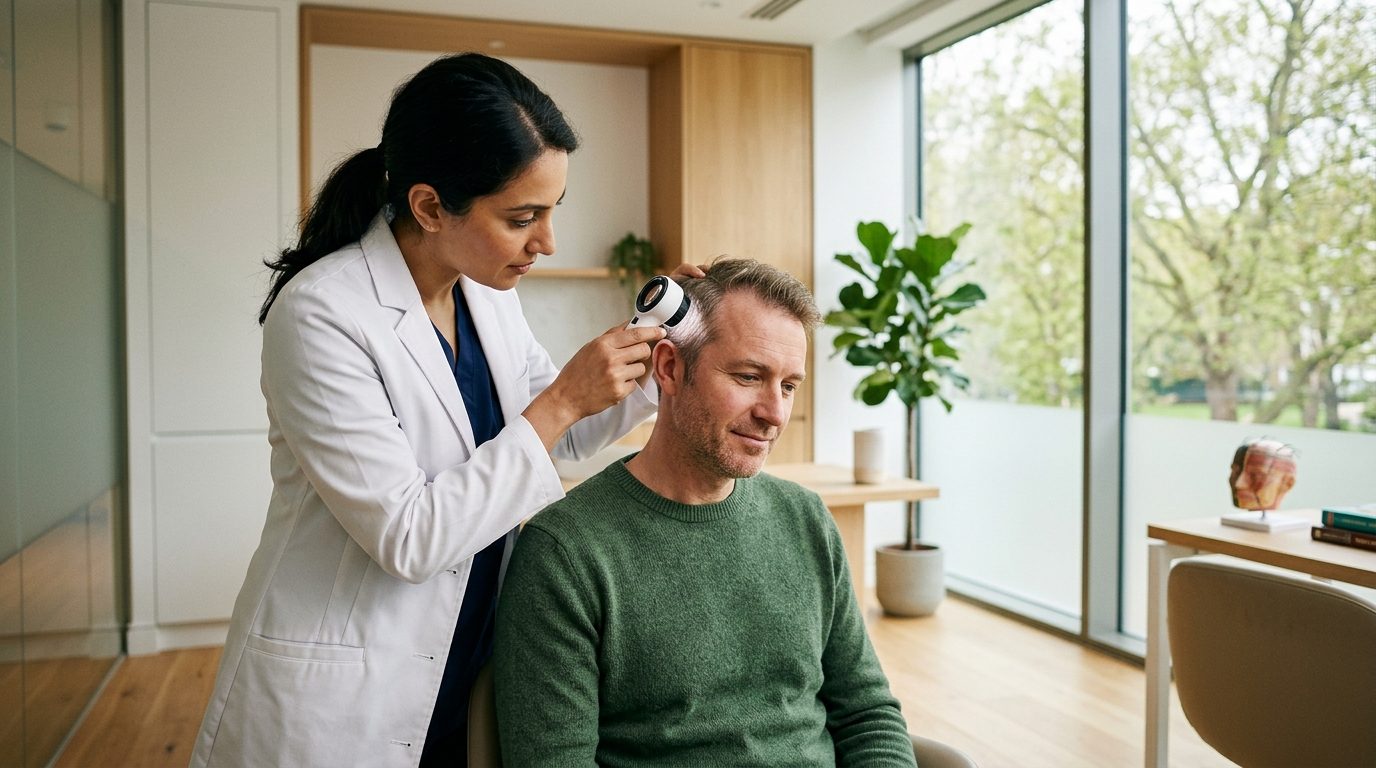
A temple hair transplant costs from around £1,290 in Turkey against £2,500–£5,000 in the UK. The temples are a small area, so the graft count is low — but the angling has to be exact for a natural result. This guide covers the cost, the grafts needed and what to expect.
What does a temple hair transplant cost?
The temples — the corners at each side of the hairline — are one of the first areas to recede, and restoring them is a small procedure. Because the count is low, this sits near the bottom of the price ladder, with the same caveat that applies to any small case: many Turkish clinics charge a minimum package price, so temple-only work often costs close to a 1,000-graft procedure.
| Route | Temple restoration (800–1,500 grafts) | Typical saving vs UK |
|---|---|---|
| Turkey (FUE package) | £1,290–£1,590 | 45–60% |
| Hungary / Poland (EU-regulated) | £1,700–£2,600 | 30–45% |
| UK private (per-graft pricing) | £2,500–£5,000 | baseline |
Already have a clinic in mind? See what the official records say about it →
The Turkish price is a package covering the surgery, a hotel stay, transfers, medication and aftercare. Because UK clinics price per graft, a genuinely small case like the temples is proportionally cheaper at home than a large one, which narrows the overseas advantage — so weigh the saving against the convenience of local follow-up. Our hair transplant abroad cost guide sets the full ladder and the Turkey cost guide breaks down the destination.
Considering a particular clinic? See what the official records say about it, free →
Ask us about a hair transplant abroad, free
Tell us what you're looking into. We send your enquiry to relevant, pre-vetted clinics, and up to 3 that can help contact you directly.
Thera is free for patients. No clinic can pay to change the prices we publish.
How many grafts do the temples need?
Temple restoration is usually a low-graft job — commonly 800–1,500 grafts for both sides, depending on how far the corners have receded and how much you want to bring them forward. Restoring just the temple points to reframe the face can take as few as 500–800 grafts; rebuilding deeper recession alongside the front hairline pushes the count higher and starts to overlap with a full hairline restoration.
The number is a clinical judgement, not a fixed menu price. The International Society of Hair Restoration Surgery (ISHRS) frames graft planning around the pattern of loss and donor supply, so a surgeon confirms your count after examining your scalp. Our guide to how many grafts you need explains the estimate, and be wary of any clinic that quotes a temple graft count before it has seen you.
Why angling matters more than count
The temples are small, but they are unforgiving. Temple hair grows at a sharp, flat angle — almost hugging the skin — and in a specific direction that differs from the frontal hairline. Get the angle or direction wrong and the result looks pluggy or artificial, however few grafts are involved. This is precise, aesthetic work, not a volume job.
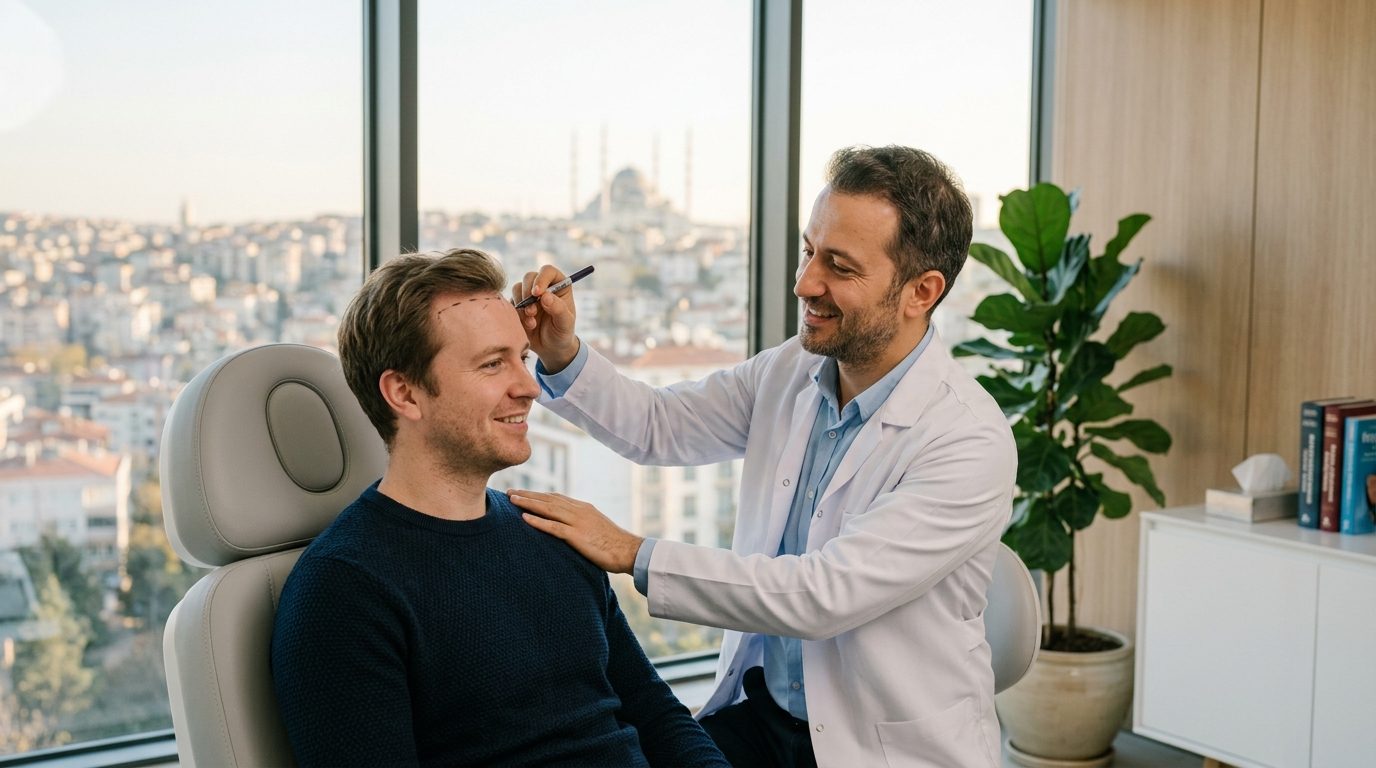
That is why the temples are a good test of a clinic's surgical judgement rather than its throughput. Recreating a natural temple point means matching the existing hair direction and building an irregular, soft edge rather than a hard line. The ISHRS warns specifically about clinics where a technician, not a doctor, performs the surgery — and delicate angling like this is exactly where that difference shows. If you are combining the temples with the front, our hairline transplant guide covers design in more depth.
Who temple restoration suits
It suits patients whose recession is concentrated at the corners while the central hairline holds, or who want to restore a more youthful frame to the face without a larger procedure. Because women's hair loss often shows at the temples, temple work is one of the more common restorations for female patients too, though the planning differs.
It suits you less well if your loss is more widespread, in which case treating the temples in isolation can leave them out of step with a receding central hairline. In that case a broader 2,000-graft plan that treats the whole front third together usually looks more balanced. A consultation should confirm which you need.
Results and aftercare
The healing timeline is the same as any transplant regardless of the small area: the transplanted hair sheds within weeks, regrowth starts around month three or four, and the full result lands at 12 to 18 months. A restored temple point reframes the face and, because the area is small, tends to blend quickly once density arrives.
The saving on a small case is modest, so plan follow-up before you fly. The NHS does not fund correction of cosmetic work done privately abroad, so get the surgeon, technique and graft count in writing and agree aftercare before you pay. Our hair transplant safety guide and the Turkey medical tourism guide cover the full vetting checklist.
Frequently Asked Questions
How much does a temple hair transplant cost in 2026?
From around £1,290–£1,590 in Turkey and £2,500–£5,000 privately in the UK. Because many Turkish clinics charge a minimum package price, temple-only work costs close to a 1,000-graft case, so the per-graft saving on such a small procedure is modest once flights are added.
How many grafts do the temples need?
Commonly 800–1,500 grafts for both sides, though restoring just the temple points can take as few as 500–800. The exact number depends on how far the corners have receded and how far forward you want to bring them, confirmed by a surgeon examining your scalp.
Why is temple angling so important?
Temple hair grows at a sharp, flat angle and a specific direction that differs from the frontal hairline. Getting the angle or direction wrong looks pluggy even with few grafts, so the temples test surgical judgement rather than volume. Precise angling is where an experienced surgeon shows.
Can women have a temple hair transplant?
Yes. Female hair loss often shows at the temples, making it one of the more common restorations for women, though the planning differs from male pattern loss. A consultation confirms whether temple-only work or a broader plan suits your pattern.
Should I treat my temples alone or the whole hairline?
If recession is confined to the corners and the central hairline holds, temple-only work suits you. If loss is more widespread, treating the temples in isolation can leave them out of step, and a broader front-third plan usually looks more balanced. A surgeon advises based on your pattern.
Clinics UK patients look at
The four with the most Google reviews among the hair transplant clinics we hold. Each has a free page with its records.
 Dr. Serkan Aygin ClinicIstanbul (Şişli), Turkey
 Esteworld Altunizade Surgical ComplexIstanbul (Altunizade, Üsküdar — Asian side), Turkey
 estethica AtaşehirIstanbul (Küçükbakkalköy, Ataşehir — Asian side), Turkey
 Dr. Cinik Hair HospitalIstanbul (Beşiktaş), Turkey

Written by Saher Shodhan
Saher Shodhan is the founder of Thera Travel, which publishes what the official records show about clinics abroad, each fact with the date it was checked, and answers patients' enquiries, free. More about Thera → How we write and check our guides →
Related posts
Hair transplant cost: UK vs Turkey (2026), from clinics' own prices

Cheapest hair transplant abroad (2026): clinics' published prices by country