

FUE vs DHI Hair Transplant
Which Is Right? (2026)
Home › Guides › FUE vs DHI Hair Transplant: Which Is Right? (2026)
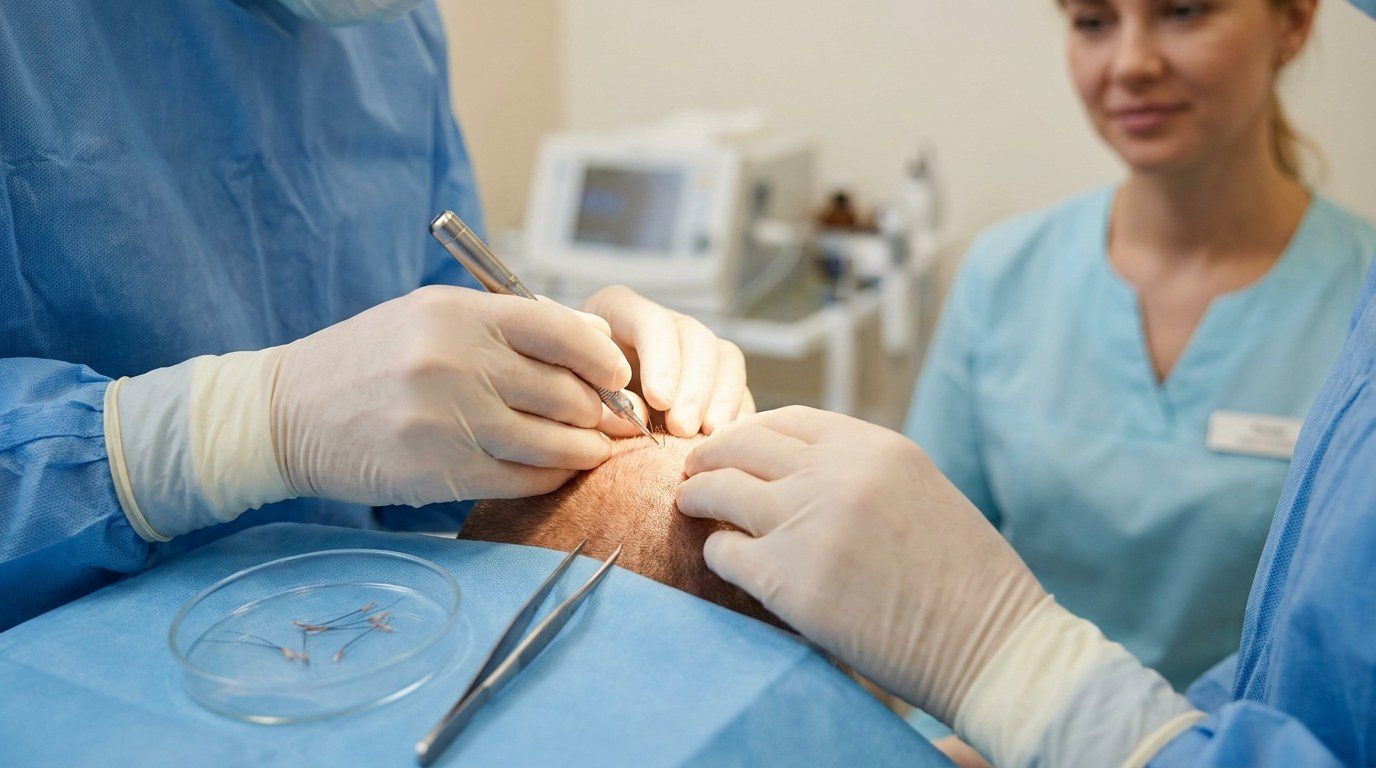
FUE and DHI are the two main hair transplant techniques. FUE is the versatile standard from £1,490; DHI adds finer control for a £500–£1,500 premium; Sapphire FUE sits between. This guide explains how each works, the differences in scarring and recovery, and which suits which case.
The short version
Both FUE and DHI extract individual follicular units from your donor area and place them where hair is thinning. The difference is only in how the grafts are implanted. That difference is real but smaller than the marketing suggests, and for most patients the surgeon matters far more than the technique. A skilled surgeon gets an excellent result with either; a technician-led clinic gets a poor one with both.
So treat the FUE-versus-DHI question as a genuine but secondary decision. Get the surgeon right first, using our safety guide and guide to choosing a clinic abroad, then discuss technique with them. The right choice depends on your hairline, your density goals and, honestly, which the surgeon performs best.
Ask us about a hair transplant abroad, free
Tell us what you're looking into. We send your enquiry to relevant, pre-vetted clinics, and up to 3 that can help contact you directly.
Thera is free for patients. No clinic can pay to change the prices we publish.
What is FUE?
FUE (Follicular Unit Extraction) is the baseline modern technique and the one most clinics default to. The surgeon extracts follicular units one by one from the donor area with a small punch, then creates recipient channels in the balding area and places the grafts into them. Because there is no strip of scalp removed, FUE leaves no linear scar, only tiny dot scars across the donor zone that are invisible under short hair.
FUE is versatile. It handles large sessions, works across the scalp, beard and eyebrows, and copes well with big cases of 3,000–4,000+ grafts. It is the reason a full restoration in Turkey costs £2,400–£3,400 rather than five figures. For how graft count drives that price, see how many grafts you need.
What is DHI?
DHI (Direct Hair Implantation) is a refinement of FUE. Instead of pre-cutting recipient channels and then placing grafts, the surgeon loads each follicle into a pen-like Choi implanter and inserts it directly, creating the channel and placing the graft in one motion. This gives tighter control over the angle, direction and depth of each hair, which can help with dense packing and precise hairline work.
The trade-offs are practical. DHI is slower and needs more trained hands, so it costs £500–£1,500 more and often suits smaller, detail-focused cases better than very large ones. It also does not usually require shaving the whole recipient area, which some patients value. It is not a different or "better" transplant; it is FUE implantation done with a different tool.
Where does Sapphire FUE fit?
Sapphire FUE is standard FUE with one change: the recipient channels are opened with a sapphire-tipped blade rather than a steel one. The finer, smoother blade can create smaller channels, which may allow denser placement and, some surgeons argue, quicker healing. It sits between standard FUE and DHI on price and precision. It is still FUE; the extraction is identical, only the channel-cutting differs.
Technique and price at a glance
Here is how the three compare, using typical 2026 Turkey prices against UK private costs for a mid-size 3,000-graft case.
| Technique | How it implants | Turkey (3,000 grafts) | UK private | Best suited to |
|---|---|---|---|---|
| Standard FUE | Pre-cut channels, then place | £1,900–£2,450 | £7,000–£12,000 | Large cases, all-round value |
| Sapphire FUE | Sapphire-blade channels | £2,400–£3,000 | £9,000–£14,000 | Dense packing, faster healing |
| DHI | Choi pen, direct insert | £2,400–£3,400 | £9,000–£16,000 | Hairline detail, no full shave |
Already have a clinic in mind? See what the official records say about it →
The premium for DHI and Sapphire FUE is real but modest against the base cost. Compare that with the country picture in our hair transplant abroad cost guide and the best country comparison.
Considering a particular clinic? See what the official records say about it, free →
Scarring and recovery: the real differences
On scarring, the two are close. Neither leaves a linear scar; both produce tiny dot scars in the donor area that disappear under hair a few millimetres long. This is the main advantage both have over the older FUT strip method, which leaves a linear scar.
On recovery, the differences are small and often overstated. Both techniques scab over the recipient area for a week or so, both shed the transplanted hair within a few weeks, and both start regrowing around month three or four with full results at 12 to 18 months. DHI's smaller instruments and, in some cases, not shaving the recipient area can make the first days look slightly tidier, but the healing timeline is essentially the same. Anyone promising a dramatically faster recovery from one technique over the other is overselling.
Which is right for you?
The genuinely useful guidance is to defer to your surgeon, because the best technique is the one they perform most skilfully on your specific pattern. That said, some rough tendencies hold:
- Large restorations (3,500+ grafts): standard or Sapphire FUE usually makes sense, as it handles high volume efficiently and keeps the cost down.
- Hairline refinement and detailed density: DHI's per-graft control can help, which is why it is often chosen for front-hairline work.
- You want to avoid a full head shave: DHI, which frequently does not require shaving the recipient area.
- Value is the priority: standard FUE, the baseline that delivers 70–80% savings versus the UK.
The ISHRS makes the point that outcomes depend far more on surgeon skill and honest planning than on the branded technique name. A clinic pushing DHI as inherently superior, or charging a large premium for a "special" method, is selling marketing. Judge the surgeon first; let them recommend the technique.
Frequently Asked Questions
What is the difference between FUE and DHI?
Both extract and transplant individual follicles; only the implantation differs. FUE pre-cuts recipient channels then places grafts, while DHI uses a Choi pen to create the channel and insert the graft in one motion. DHI gives finer angle control and costs £500–£1,500 more. Neither leaves a linear scar.
Is DHI better than FUE?
Not inherently. DHI offers tighter control over hairline detail and often avoids a full head shave, but FUE handles large cases more efficiently and costs less. The ISHRS stresses that surgeon skill matters far more than technique. For most patients the better choice is whichever the surgeon performs best.
Is DHI worth the extra cost?
It depends on your case. For detailed hairline work or if you want to avoid shaving the recipient area, the £500–£1,500 premium can be worth it. For a large restoration where value matters, standard FUE delivers the same follicles at a lower price. Discuss it with your surgeon.
What is Sapphire FUE?
Sapphire FUE is standard FUE using a sapphire-tipped blade to open recipient channels instead of steel. The finer blade can allow denser placement and, some surgeons say, quicker healing. The extraction is identical to normal FUE; only the channel-cutting tool changes. It costs a little more than standard FUE.
Which technique leaves less scarring?
FUE, Sapphire FUE and DHI all leave only tiny dot scars in the donor area that vanish under short hair, with no linear scar. They are similar on scarring, and all three scar far less visibly than the older FUT strip method, which leaves a linear scar across the back of the scalp.
Does FUE or DHI have a faster recovery?
The recovery timelines are essentially the same: scabbing for about a week, shedding within a few weeks, regrowth from month three or four, and full results at 12–18 months. DHI may look slightly tidier in the first days if the recipient area is not shaved, but the underlying healing is the same.
See also: hair transplant cost in the UK and Turkey.
Clinics UK patients look at
The four with the most Google reviews among the hair transplant clinics we hold. Each has a free page with its records.
 Dr. Serkan Aygin ClinicIstanbul (Şişli), Turkey
 Esteworld Altunizade Surgical ComplexIstanbul (Altunizade, Üsküdar — Asian side), Turkey
 estethica AtaşehirIstanbul (Küçükbakkalköy, Ataşehir — Asian side), Turkey
 Dr. Cinik Hair HospitalIstanbul (Beşiktaş), Turkey
Written by Saher Shodhan
Saher Shodhan is the founder of Thera Travel, which publishes what the official records show about clinics abroad, each fact with the date it was checked, and answers patients' enquiries, free. More about Thera → How we write and check our guides →
Related posts
Hair transplant cost: UK vs Turkey (2026), from clinics' own prices

Cheapest hair transplant abroad (2026): clinics' published prices by country