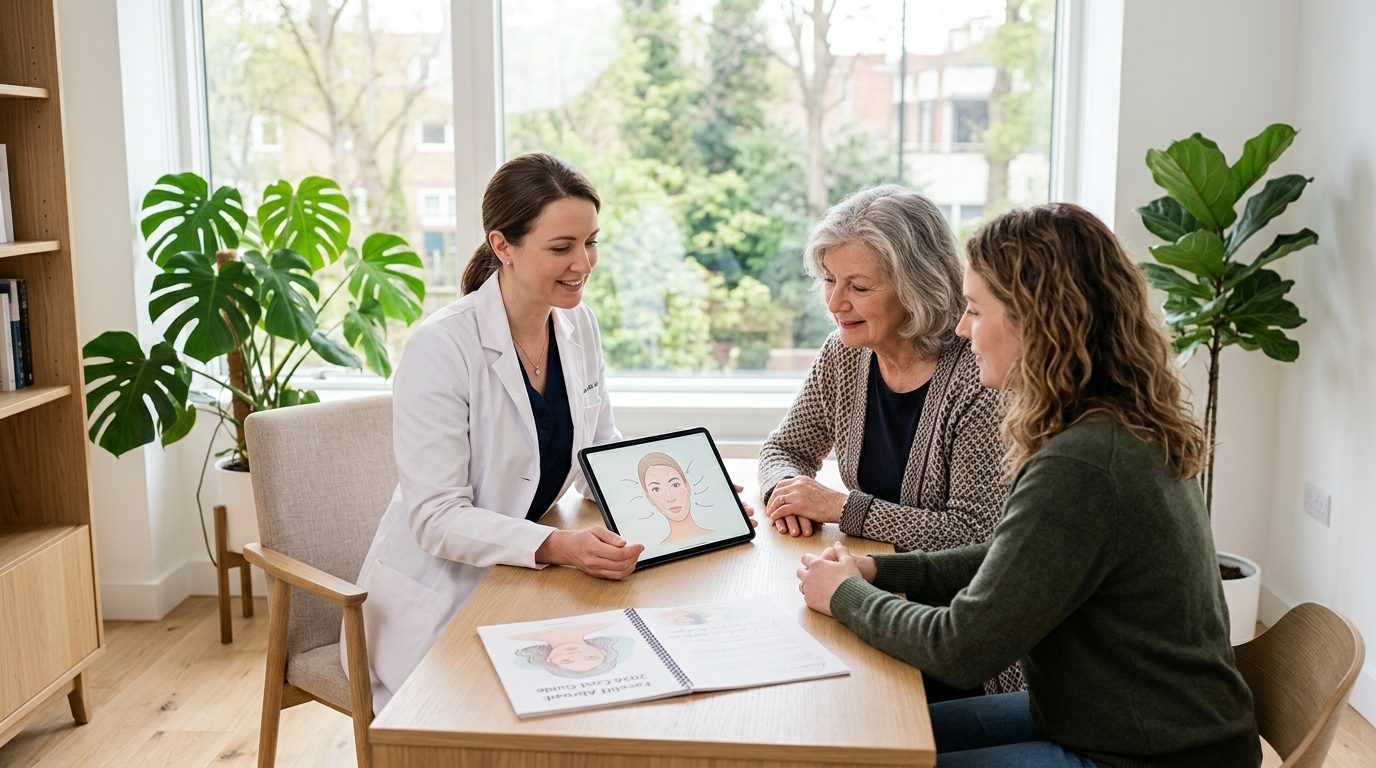

How to communicate with your overseas medical team
Home › Guides › How to communicate with your overseas medical team

Contact the clinic with an organised record pack, a short clinical summary, and a list of exact questions. That is the single most effective first move for any UK patient considering treatment abroad. You will get a meaningful initial estimate back, a named clinical contact, and a clear picture of whether an in-person assessment is required before surgery can be confirmed.
Before you send anything, speak to your NHS GP or specialist. NHS guidance is clear: applications for prior authorisation for planned European treatment take at least 20 working days to process, and incomplete applications delay that further. Your GP can also flag any long-term conditions that an overseas clinician may not know about, and they will need to be involved in your aftercare regardless.
Your first three steps
- Speak to your NHS GP or specialist and get their written sign-off or summary.
- Assemble your medical records, imaging, and a one-page clinical summary.
- Check the clinic on its country’s official register, then contact it directly with your pack and your questions.
Table of Contents
- What should you prepare before contacting the clinic?
- What exactly should you ask on first contact?
- How do you send medical records securely to an overseas team?
- What communication standards and red flags should you check before booking?
- How do you plan travel, recovery, and continuity of care with UK services?
- A ready-to-use email template and phone script
- How to check a clinic before you book
- Key takeaways
- Useful sources for UK patients planning treatment abroad
Ask us about treatment abroad, free
Tell us what you're looking into. We send your enquiry to relevant, pre-vetted clinics, and up to 3 that can help contact you directly.
Thera is free for patients. No clinic can pay to change the prices we publish.
What should you prepare before contacting the clinic?
The quality of the response you get from an overseas team depends almost entirely on what you send them. A vague message gets a vague reply. A structured record pack gets a structured estimate.
Documents to gather
- GP or specialist referral letter or clinical summary
- Imaging files: DICOM format for CT, MRI, or X-ray where possible (JPEG copies are often too low-resolution for a surgeon to assess)
- Pathology reports and any biopsy results
- Recent blood test results (within the last three months if possible)
- Current medication list with dosages
- Passport (check validity: most destinations require at least six months beyond your return date)
Once you have those, write a one-page clinical summary: your age, diagnosis, relevant history, what treatment you are considering, and what you want the overseas team to confirm. Keep it to 300 words. A clinician reviewing twenty enquiries a day will read a concise summary; they may skim a long letter.
Practical checks matter too. Confirm whether your medication can be carried into the destination country in the quantities you need. If your procedure involves a general anaesthetic or significant recovery, consider whether a companion is recommended or required.

Pro Tip: Label every file clearly: “Surname_FirstName_MRI_Spine_2025.dcm” rather than “scan1.dcm”. Use a secure upload portal rather than standard email wherever the clinic offers one. Portals allow immediate clinical access and speed up the estimate process considerably.
What exactly should you ask on first contact?
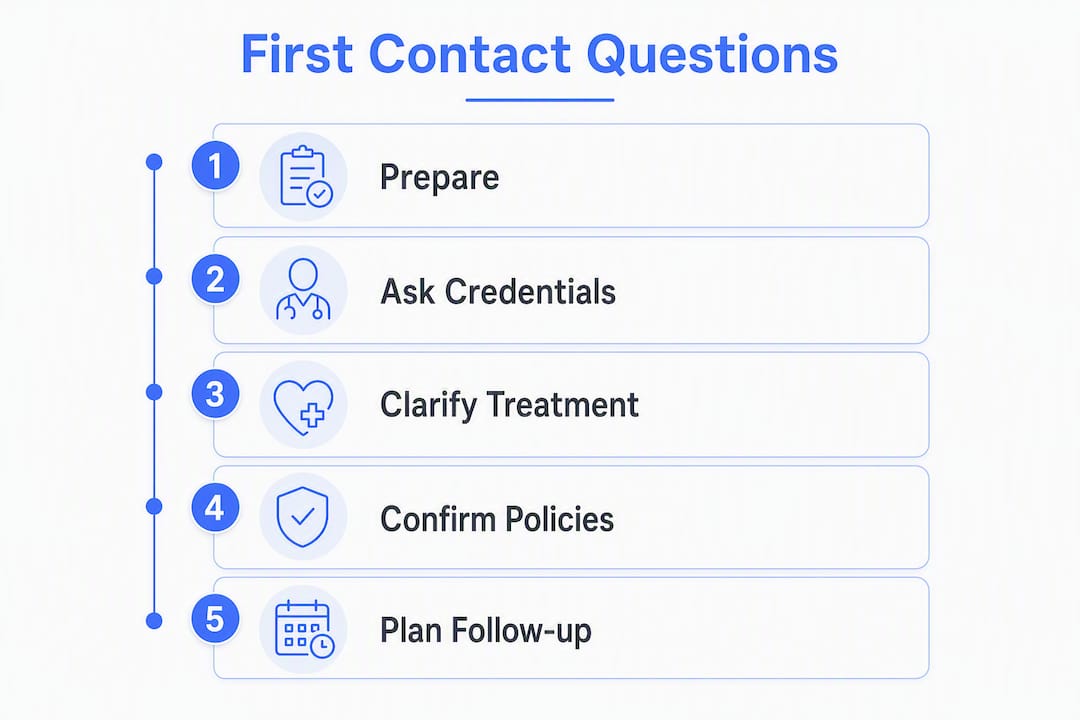
A first-contact message to an overseas clinic should extract specific answers, not brochure language. Use this checklist.
Clinical questions:
- Who will assess my case, and who will perform the procedure? Ask for the surgeon’s name and registration number.
- Will an in-person assessment be required before surgery is confirmed?
- What tests might be needed on arrival, and how will that affect the timeline?
- How and when is final consent obtained?
Documentation and language
- Will consent forms, the treatment plan, and the discharge summary be provided in English?
- Is a medically trained interpreter available if needed?
Costs and timeline
- Can you provide an itemised written estimate? What is excluded?
- What payment methods do you accept, and is a deposit required?
- What is the expected length of stay, and what are the key recovery milestones?
Aftercare and complications
- Who manages post-operative complications, and how do I contact them remotely?
- Will the clinic communicate directly with my UK GP?
Bear in mind that initial treatment plans are estimates until a clinician has assessed you in person. The scope, and sometimes the cost, can change after that assessment. Any clinic that gives you a guaranteed fixed price before seeing you in person is overpromising.
How do you send medical records securely to an overseas team?
Secure transfer is not optional. Sending imaging and clinical reports via unencrypted email creates a data protection risk and often results in files that are too large to open or too low-resolution to read.
Preferred methods
- Use the clinic’s secure patient portal where available. Organised files submitted via secure portals reach the clinical team faster and reduce back-and-forth.
- If no portal exists, use an encrypted file-sharing service. Avoid standard Gmail or Outlook attachments for imaging files.
- Keep copies of everything you send, and share a copy with your UK GP.
File formats
- DICOM for all imaging (CT, MRI, X-ray)
- PDF for written reports, letters, and blood results
- Include originals and any certified translations if your records contain non-English text
Pro Tip: Create a one-page index at the front of your record pack: document name, date, and a one-line description. A clinician can then locate the relevant scan or report in seconds rather than opening every file.
What communication standards and red flags should you check before booking?
A reputable clinic communicates in a specific way. Patient safety guidance is consistent: any provider that focuses only on price, ignores your health history, or refuses to provide written documentation is a risk.
Minimum standards to expect:
- A named treating clinician with a verifiable registration number
- Written estimate and treatment plan in English
- Access to a medically trained representative or interpreter
- Documented aftercare plan and emergency contact pathway
Red flags
- Pressure to book quickly or pay a deposit before reviewing your records
- Reluctance to name the operating surgeon
- Unclear implant or device details (brand, model, regulatory approval)
- Refusal to supply consent forms or aftercare instructions in English
- Conversations that stay on price and never address clinical suitability
To verify credentials, ask for the clinic’s national registration number and any recognised accreditations such as JCI (Joint Commission International). Request the surgeon’s CV or professional profile. A clinic accredited to a recognised standard will share this without hesitation.
Pro Tip: Ask specifically: “What is your documented policy if I develop a complication after returning to the UK?” A reputable clinic will have a written answer. Vagueness here is a serious warning sign.
How do you plan travel, recovery, and continuity of care with UK services?
Plan your travel around clinical milestones, not around cheap flights. The typical sequence is: initial consultation or remote assessment, surgery date, post-operative observation period, and then clearance to fly.
Before you book flights, ask the clinic for the minimum recommended stay after the procedure. Some orthopaedic and spinal procedures require wound checks, blood tests, or physiotherapy sessions before a surgeon will clear you to travel. Flying too early after certain surgeries carries genuine clinical risk.
Before you leave the destination country, confirm you have:
- A full discharge summary and operation report
- Imaging or lab results from the procedure
- A current medication list and any new prescriptions
- Implant details (brand, model, lot number) if applicable
- Written aftercare instructions and a remote follow-up contact
Standard travel insurance almost always excludes elective surgical complications. Specialist medical travel insurance that explicitly covers surgical complications, extended stays, and emergency repatriation is not a nice extra. It is the only cover that actually protects you. Check the policy wording before you book anything.
For continuity with your UK GP, send the discharge summary and operation report as soon as you return. Your GP needs implant details, the surgeon’s contact information, and a clear list of follow-up requirements. This is also the moment to confirm any scheduled imaging or physiotherapy back in the UK.
A ready-to-use email template and phone script
Email template
Subject: Treatment enquiry — [Procedure] — [Your Name]
Dear [Clinic Name] International Patient Team,
I am a UK-based patient enquiring about [procedure]. I have attached a one-page clinical summary, relevant imaging (DICOM), and recent blood results. Please find an index of attached documents below.
I would be grateful if you could confirm: (1) the name and registration number of the surgeon who would assess and treat me; (2) an itemised written estimate in GBP or EUR; (3) whether an in-person assessment is required before surgery can be confirmed; (4) whether consent forms, the treatment plan, and discharge summary will be provided in English; and (5) your policy for managing post-operative complications after I return to the UK.
Attachments: Clinical summary (PDF) | MRI spine (DICOM) | Blood results March 2025 (PDF)
Kind regards, [Your Name] | DOB: [Date] | NHS Number: [Number]
Phone script
“Hello, I am a UK patient enquiring about [procedure]. I have medical records ready to send. Could you confirm the name of the surgeon who would treat me, whether an in-person assessment is required, and the best way to send my records securely? I would also like to know your process if a complication arises after I return home.”
Pro Tip: Label every attachment as shown in the index. Admin teams process dozens of enquiries daily. A clearly labelled pack with an index page gets to the clinical team faster than an unlabelled folder.
How to check a clinic before you book
Good communication tells you a lot, but it is not the same as a check. Before you pay a deposit, look at what the records say.
- The official register. Find the clinic on its country’s official register, under the legal name on the quote.
- The surgeon. Get the operating surgeon’s name in writing and look them up on their professional register.
- The reviews. Read them, including the low-rated ones, and check which Google listing belongs to the actual hospital.
- The quote. Get it itemised in writing, showing what is included and what is not.
- Coming home. Ask what happens if something goes wrong once you are back in the UK, and who pays.
Registration and accreditation are the criteria patient safety guidance uses to tell reputable providers from risky ones. Our 15 questions to ask a clinic is a ready-made list to send with your record pack, and you can browse clinics by country. If you are researching spinal surgery, our guides to endoscopic spine surgery and laminectomy abroad cover the procedures and recovery.
Key takeaways
Effective communication with an overseas medical team starts before you contact the clinic: NHS sign-off, an organised record pack, and a precise list of questions are what separate a productive first contact from a wasted one.
| Point | Details |
|---|---|
| Speak to your NHS GP first | NHS prior authorisation takes at least 20 working days; your GP’s summary also protects continuity of care on return. |
| Prepare a structured record pack | Include DICOM imaging, a one-page clinical summary, blood results, and a document index before making contact. |
| Request English documentation | Consent forms, treatment plans, and discharge summaries must be provided in English; confirm a medically trained interpreter is available. |
| Verify accreditation and credentials | Ask for the surgeon’s registration number, JCI or national accreditation, and a written complications policy before booking. |
| Check the clinic’s records | Look up the clinic’s official register entry and the surgeon’s registration, and read the reviews, before you pay a deposit. |
Already have a clinic in mind? See what the official records say about it →
A note on getting this right
Most of the anxiety around treatment abroad comes from uncertainty: not knowing who you will actually see, what the real cost will be, or what happens if something goes wrong after you land back at Heathrow. The practical steps in this guide address each of those directly. What I would add is this: the clinics worth choosing are the ones that make verification easy. They share surgeon profiles without being asked. They send written estimates without chasing. They have a documented complications policy ready to hand. If a clinic makes any of those things feel like an inconvenience, that tells you something important.
Thera Travel does not recommend or book any clinic. If you are already talking to one, you can see a free summary of what the official records say about it.
Useful sources for UK patients planning treatment abroad
These official and authoritative resources should be your first stops before booking anything.
- Going abroad for medical treatment — NHS: NHS guidance on prior authorisation, timelines, and what to discuss with your GP before booking.
- Treatment abroad checklist — NHS: A practical checklist covering GP involvement, aftercare, and transferring medical notes to an overseas team.
- Surgery abroad: cut out the risk — Travel Aware: UK government guidance on language barriers, facility standards, and agreeing treatment with your UK clinician first.
- Medical tourism: travelling for treatment — TravelHealthPro: Covers specialist insurance requirements, complication risks, and what standard travel policies exclude.
- Questions to consider when travelling abroad for medical treatment — Fit for Travel NHS: A detailed question list for patients to ask the healthcare professional carrying out their treatment.
- How to check if an overseas clinic is legitimate — All Health and Care: Covers accreditation, clinician qualifications, transparent pricing, and aftercare responsibilities.
- Medical emergency communication — SOS-ID: Explains emergency communication tools and best practice for patients in destination countries.
This article provides general information for patients considering elective treatment abroad. It is not medical or legal advice. Confirm your specific circumstances with your NHS clinician and consult the relevant primary sources before making any booking.
Recommended
- How Overseas Surgery Approval Works: 2026 Patient Guide
- Overseas Treatment Options: Your 2026 Patient Guide
- How Families Navigate Overseas Surgery: 2026 Guide
- Why Doctors Refer Patients Abroad: A 2026 Guide

Written by Saher Shodhan
Saher Shodhan is the founder of Thera Travel, which publishes what the official records show about clinics abroad, each fact with the date it was checked, and answers patients' enquiries, free. More about Thera → How we write and check our guides →
Related posts

Cross Border Directive: how to get the HSE to refund treatment abroad
Hip and knee replacement abroad from Ireland: costs, waits and HSE refunds