

Hip Replacement Abroad
The Trip, Step by Step
Having a hip replacement abroad, step by step: quote and deposit, the flight out, days in hospital, flying home, the first six weeks, what the NHS will and won't do.
Home › Orthopaedics › Hip Replacement Abroad: The Trip, Step by Step
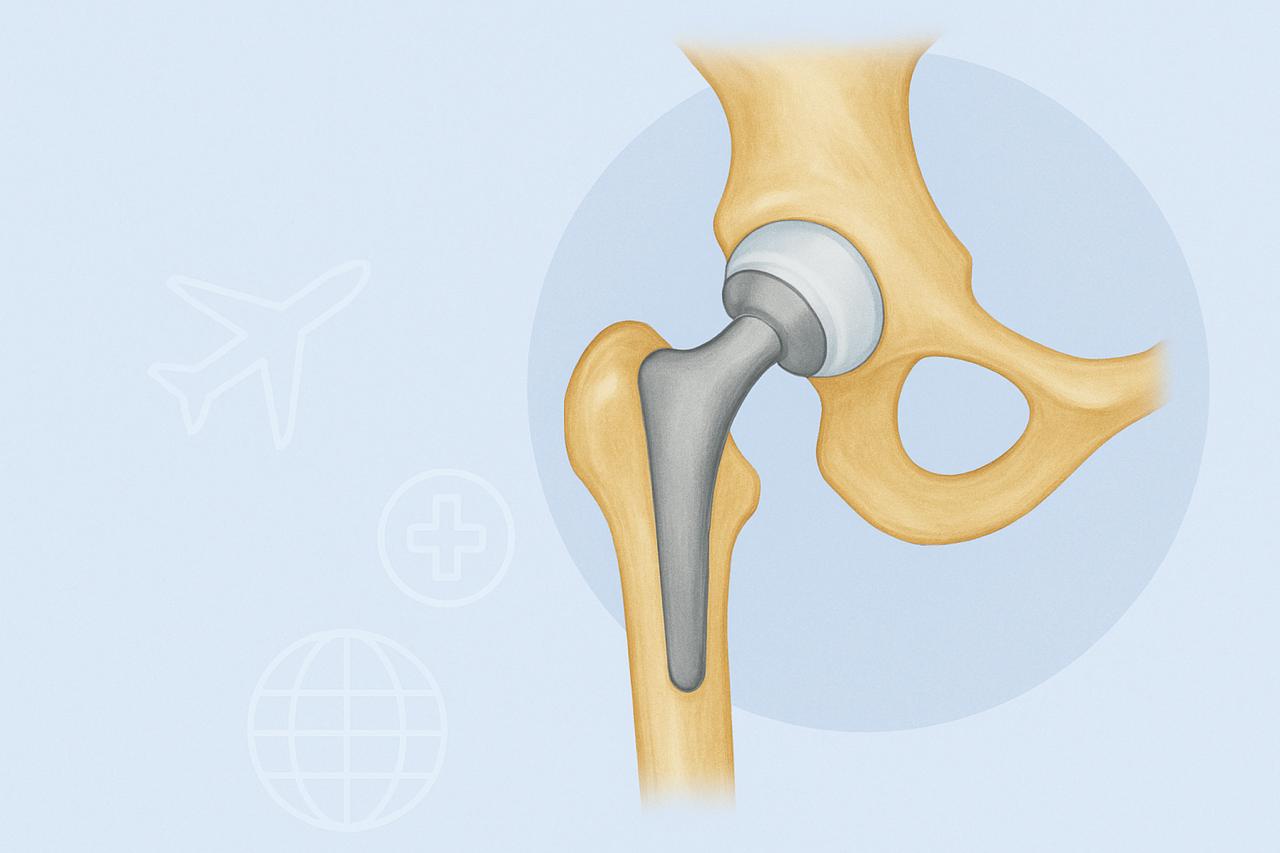
Having a hip replacement abroad is a trip in seven parts: the quote and deposit, the flight out, the days in hospital, the flight home, the first six weeks at home, what the NHS will and won't do, and what happens if something goes wrong. This guide takes them in order, with the source and date for each fact, so you can picture the whole trip before you commit to any of it.
In our July 2026 price research a total hip replacement cost £5,500 to £9,500 in Poland, £3,800 to £7,700 in Lithuania and £6,000 to £11,500 in Turkey, against £12,000 to £17,000 at a UK private hospital. On the NHS the average wait was about 27 weeks in February 2025 (UK Parliament written answer).
Before you pay a deposit
Three checks to make yourself before any money changes hands:
- Find the hospital on its country's official register under the company name on your quote. Our country guides link to each register.
- Get your surgeon's full name in writing and look them up where the country has a public register of doctors.
- Get the plan in writing: nights in hospital, physio, the implant, when you will be fit to fly, and what happens if you need help with the hip once you are home.
Clinics we hold, by country
Each has a free summary page: the register entry we found, the Google listings and any published prices. Thera is free for patients. No clinic can pay to change the prices we publish.
- Poland12 orthopaedic clinics with a free summary page
- Lithuania5 orthopaedic clinics with a free summary page
- Latvia4 orthopaedic clinics with a free summary page
- Turkey65 orthopaedic clinics with a free summary page
- Spain26 orthopaedic clinics with a free summary page
- India17 orthopaedic clinics with a free summary page
1. Before you go: the quote, the deposit, your GP and insurance
Start with the hospital itself, then the paperwork. Our guides to checking a clinic in Poland, Lithuania, Turkey and Spain show where each register is.
- The quote: ask for every item in writing. Nights in hospital, physio sessions, the implant maker and model, hotel nights before you can fly, and transfers. Prices quoted in złoty or euros move with the exchange rate.
- The deposit: ask how much, whether it is refundable and until when, and what happens if your date or your surgeon changes.
- Your GP: the NHS treatment abroad checklist asks you to involve your GP before you go and to agree how your medical notes will reach the team abroad. Ask your GP practice for a summary of your history and medicines to take with you, and ask who will remove stitches or clips when you are back.
- Insurance: NHS guidance says most travel insurance will not cover planned treatment abroad, so you may need specialist cover. Tell your insurer what you are planning (NHS, checked 6 October 2026).
Ask us about an operation abroad, free
Tell us what you're looking into. We send your enquiry to relevant, pre-vetted clinics, and up to 3 that can help contact you directly.
Thera is free for patients. No clinic can pay to change the prices we publish.
2. The flight out
Book help at both airports when you book the flight, and an aisle seat for the way home. Take your GP summary, your scans and a list of your medicines in your hand luggage. For Poland and other Schengen countries, the Foreign Office says your passport must have been issued less than 10 years before you arrive and be valid for at least 3 months after the day you plan to leave, and you can stay up to 90 days in any 180 without a visa (FCDO, checked 6 October 2026). The EU's Entry/Exit System now takes fingerprints and a photo at the border. Rules for Turkey and India differ, so check the Foreign Office page for your country.
If someone travels with you, their flights and hotel are part of the cost of the trip.
3. The days in hospital
How long you stay depends on the hospital and the package: our July 2026 research found 3 to 4 nights typical in Poland, and 1 to 2 nights in Lithuania with up to a week of rehab at the top of the range. The NHS says most people go home 1 to 3 days after a hip replacement, use crutches or a walking frame at first, wait at least 6 weeks to drive, go back to work after about 6 weeks, and take several months to recover (NHS, reviewed 6 March 2024). Ask before you go who you call at night if you need a nurse, whether the nurses speak English, and what physio you will have each day.
Before you leave hospital, ask for your discharge summary, the record of your implant, your X-rays, a written exercise plan and your medicines, with how long to take each one. Your GP will need all of it.
4. Flying home
Your surgeon decides when you are fit to fly; ask for it in writing. The Royal Orthopaedic Hospital, an NHS trust, advises waiting 3 months after a hip or knee replacement before any journey longer than 4 hours, and no long-haul flight within 4 weeks of any surgery (ROH, checked 6 October 2026). The NHS lists recent surgery, being over 60 and a journey of more than 4 hours by plane, car or train as risk factors for a blood clot (NHS, reviewed 30 April 2026). A direct flight from London Stansted to Poznań takes about two hours, and from London to Kaunas or Vilnius about 2 hours 35 to 2 hours 45 minutes; count the whole journey door to door. More in our guide to how long after a hip replacement you can fly.
5. The first six weeks at home
Book an appointment with your GP practice for your first week home and take the discharge summary and implant record with you. Keep doing the exercises from your plan; if the hospital's physio stops when you fly home, ask your GP how to get physio locally, and whether it will be on the NHS or private. Agree before you travel who removes stitches or clips, and when.
Who to call: the hospital abroad for questions about the operation itself, your GP for everyday care, NHS 111 for urgent advice, and 999 if you have chest pain or are short of breath, which can be a sign of a blood clot (NHS).
6. What the NHS will and won't do
- Your GHIC or EHIC does not cover going abroad for planned treatment (NHS, checked 6 October 2026).
- The NHS is not liable for negligence or failure of treatment abroad, and you need to know how your aftercare will work when you return home (same page).
- The S2 route can fund planned treatment in an EU country, but only at a state hospital, only if approved before treatment, and not at a private clinic. Travel and accommodation are not covered.
- The old EU refund route has closed: the NHS says it only applies to treatment started or approved before 11pm on 31 December 2020 (NHS).
7. If something goes wrong
While you are abroad, raise it with the hospital straight away and ask for it to be written in your notes. In Poland, the government's Patient Ombudsman (Rzecznik Praw Pacjenta) looks into breaches of patient rights; complaints are free and must be signed, and its patient helpline is 800 190 590 (RPP, checked 6 October 2026).
Once you are home: call 999 for chest pain or shortness of breath, and NHS 111 or your GP for anything else that worries you. Write to the hospital with dates and photos and keep their reply. Keep every record, X-ray and receipt. The worries that feel endless before the trip come down to this short list, and each one has an answer you can find before you pay a deposit.
Questions people ask
How long do I need to stay abroad after a hip replacement?
It depends on the hospital and on when your surgeon says you are fit to fly. Our July 2026 research found 3 to 4 nights in hospital typical in Poland, and 1 to 2 nights in Lithuania with up to a week of rehab. Some people stay longer in a hotel before flying.
Will the NHS look after me after a hip replacement abroad?
The NHS is not liable for treatment abroad and your GHIC does not cover planned treatment (NHS guidance, checked 6 October 2026). Agree aftercare with the hospital and your GP before you go.
Can the NHS pay for my operation abroad?
Only through the S2 route, at a state hospital in an EU country, approved before treatment. It does not cover private clinics.
When can I fly home after a hip replacement?
Your surgeon decides. The Royal Orthopaedic Hospital, an NHS trust, advises waiting 3 months before journeys over 4 hours, and no long-haul flight within 4 weeks of any surgery.
Related guides: the countries UK patients choose for a hip, hip replacement in Poland and hip replacement in Lithuania.
See also: hip replacement cost in the UK, published hip and knee prices abroad.
This guide is general information, not medical advice.
What it costs: Hip replacement cost in the UK · Best countries for a hip replacement
Clinics UK patients look at
The four with the most Google reviews among the orthopaedic clinics we hold. Each has a free page with its records.
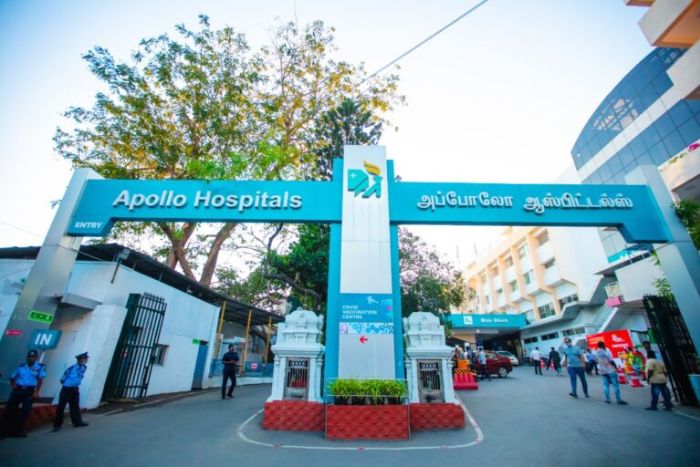 Apollo Hospitals, Greams Road, Chennai
 KIMS-Sunshine Hospitals, Begumpet
 Yashoda Hospitals, Somajiguda
 Yashoda Hospitals, Malakpet